




Untreated tooth decay is the primary cause of dental abscesses and several other significant oral health complications. When a cavity is not repaired, bacteria continue to dissolve the tooth structure until they reach the central pulp, where the nerves and blood vessels are located. This leads to an infection that can travel through the root of the tooth and into the surrounding tissues, resulting in a collection of pus known as an abscess. If not managed promptly by a dental professional, these infections can spread beyond the mouth, posing a risk to the patient’s systemic health.
What We’ll Discuss in This Article
- The clinical progression from a cavity to a dental abscess.
- The difference between periapical and periodontal abscesses.
- Common symptoms and warning signs of a spreading infection.
- The risk of cellulitis and systemic complications from tooth decay.
- How dentists treat abscesses to prevent further health issues.
- The importance of prompt intervention in preventing emergency admissions.
How Decay Leads to an Abscess
A dental abscess is a direct consequence of bacteria invading the inner chambers of a tooth. In the early stages of decay, the infection is confined to the enamel and dentine. However, as the decay deepens, bacteria enter the pulp chamber, causing an infection called pulpitis. Because the pulp is encased in a hard shell, the resulting inflammation creates intense pressure that eventually kills the pulp and allows the infection to exit through the bottom of the tooth root.
Once the infection reaches the tip of the root, it enters the jawbone and surrounding soft tissues. The NHS describes a dental abscess as a painful collection of pus that can form inside the teeth, gums, or the bone that holds the teeth in place. Without clinical intervention to remove the source of the bacteria either through a root canal or an extraction the abscess will continue to grow, potentially leading to more severe complications.
Types of Abscesses Caused by Decay and Gum Disease
While tooth decay is the most common cause, there are different types of abscesses depending on where the infection originates. A periapical abscess is the most frequent result of severe decay; it forms at the tip of the tooth root. This type of abscess specifically indicates that the nerve of the tooth has died or is dying due to bacterial invasion.
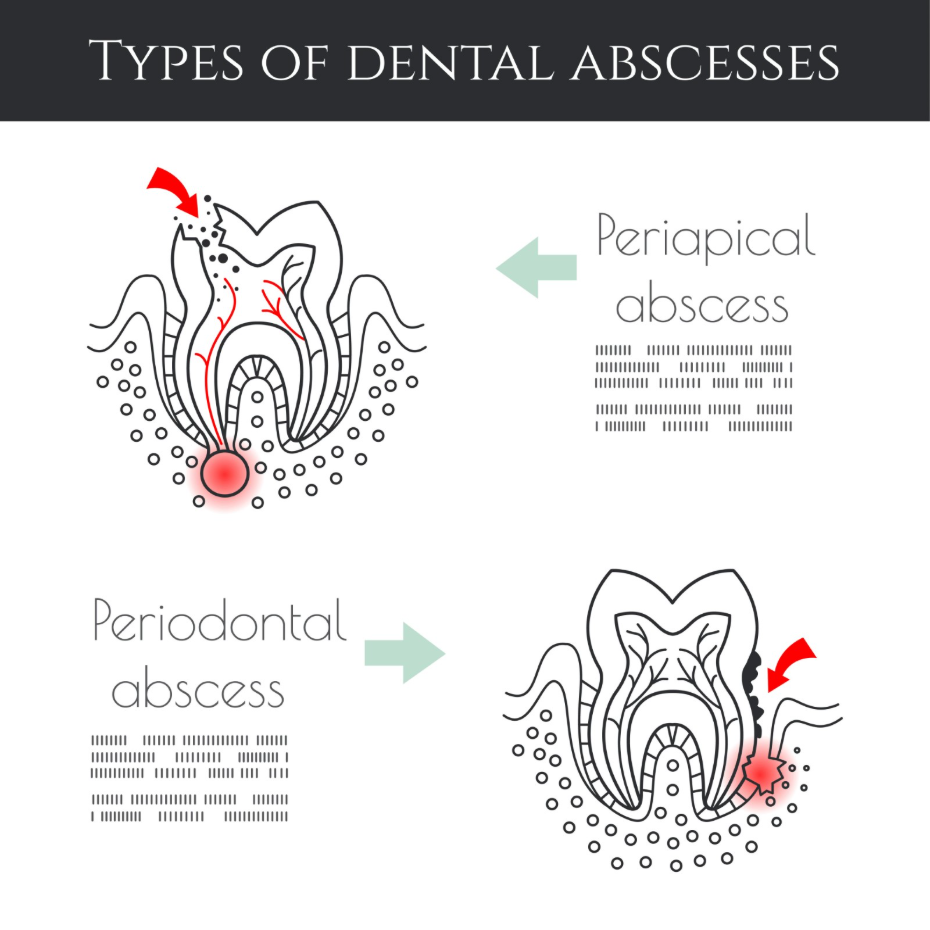
In contrast, a periodontal abscess starts in the space between the tooth and the gum, often because of advanced gum disease rather than decay alone. Both types of abscesses require urgent dental care, as they both involve an active bacterial infection that the body cannot resolve on its own. Regardless of the type, the presence of an abscess indicates that the body’s local defences have been overwhelmed by bacteria.
Recognising Symptoms of a Spreading Infection
The primary symptom of a dental abscess is a severe, throbbing pain that often radiates to the jaw, neck, or ear. This pain is typically persistent and can be aggravated by lying down or by exposure to hot and cold temperatures. Other common signs include facial swelling, redness in the gums, a foul taste in the mouth caused by draining pus, and sensitivity when biting or chewing.
It is vital to monitor for signs that the infection is spreading. These include a high temperature (fever), a general feeling of being unwell, and difficulty swallowing or opening the mouth. UK Government health resources indicate that a dental abscess that causes facial swelling or systemic symptoms requires immediate attention to prevent life-threatening complications. If the swelling begins to affect the airway or the patient has trouble breathing, it is considered a medical emergency.
Serious Complications Beyond the Tooth
If a dental abscess is left untreated, the infection can spread to other parts of the head and neck. One such complication is cellulitis, a painful bacterial skin infection that causes the face or neck to become red, hot, and swollen. In rare cases, the infection can travel to the floor of the mouth, a condition known as Ludwig’s Angina, which can cause the tongue to swell and obstruct the airway.
Another serious but rare complication is osteomyelitis, an infection of the jawbone itself. Furthermore, bacteria from a dental abscess can enter the bloodstream, potentially leading to sepsis, a life-threatening reaction to infection. These outcomes demonstrate that tooth decay is not merely a localised dental problem but a condition that can have profound effects on the entire body if the primary infection is not eliminated.
Comparison of Localised vs. Spreading Infection
| Symptom Category | Localised Abscess | Spreading Infection (Urgent) |
| Pain Level | Throbbing, localised to tooth | Radiating to jaw, neck, or head |
| Swelling | Small bump on the gum | Visible facial or neck swelling |
| Temperature | Usually normal | Fever or chills |
| Mouth Function | Pain when biting | Difficulty opening the mouth (Trismus) |
| General Health | Generally, feels fine | Feeling lethargic or unwell (Malaise) |
Professional Treatment of Dental Abscesses
Treatment for a dental abscess focuses on draining the pus and removing the source of the infection. A dentist may need to make a small incision in the gum to allow the abscess to drain, which often provides immediate pain relief. However, the underlying cause the decayed tooth must also be addressed. This is typically done through a root canal procedure to clean out the infected canals or by extracting the tooth if it is too damaged to save.
Antibiotics are sometimes prescribed if the infection is spreading or if the patient has a weakened immune system. However, antibiotics alone cannot cure a dental abscess; they only help the body manage the surrounding infection while the dentist physically removes the bacteria from the tooth. Once the source of the infection is gone, the body can begin the process of healing the bone and soft tissues.
Conclusion
Tooth decay is a progressive condition that, if ignored, can lead to painful and dangerous complications like dental abscesses. These infections represent a significant risk not only to oral health but to systemic wellbeing, potentially causing bone loss, facial swelling, and serious infections. Early intervention at the first sign of a cavity or persistent toothache is the most effective way to prevent an abscess from forming. If you experience severe, sudden, or worsening symptoms, call 999 immediately.
Can an abscessed tooth heal on its own if I keep it clean?
No, a dental abscess cannot heal on its own because the bacteria are trapped inside the tooth or bone where brushing and flossing cannot reach them.
What happens if a dental abscess bursts?
If an abscess bursts, you may feel sudden pain relief and notice a foul taste, but the infection is still present and will return unless the underlying tooth decay is treated by a dentist.
Is a dental abscess always painful?
Usually, an abscess causes severe pain, but in some chronic cases where the nerve has died completely and the pus is slowly draining, there may be little to no pain despite the ongoing infection.
How do I sleep with a dental abscess?
Propping your head up with extra pillows may help reduce the throbbing pain by lowering the blood pressure in the head and neck area, but this is only a temporary measure until you can see a dentist.
Can I take painkillers to treat a dental abscess?
Over-the-counter painkillers can help manage the symptoms, but they do not treat the infection itself; you must see a dentist to remove the source of the bacteria.
Why does my dentist want to take an X-ray of an abscess?
An X-ray allows the dentist to see the extent of the bone loss around the root and determine if the infection has spread to neighbouring teeth or the jawbone.
How long does it take for a dental abscess to form?
An abscess can form in as little as a few days once the bacteria reach the pulp, although the tooth decay leading up to that point usually takes months or years to progress.
Authority Snapshot (E-E-A-T)
This article is designed to provide factual education on the complications of tooth decay and is intended for public awareness. It was produced by the medical content team and reviewed by Dr. Stefan Petrov, a UK-trained physician with an MBBS and certifications in BLS and ACLS. Dr. Petrov has extensive experience in general medicine, surgery, and emergency care across hospital wards and intensive care units. This content is strictly aligned with the health standards and clinical evidence provided by the NHS and NICE.



