




Surgery increases the risk of deep vein thrombosis and pulmonary embolism by triggering the body natural clotting response through localised tissue trauma and significant periods of immobility during and after a procedure. In the United Kingdom, healthcare professionals identify that the combination of vessel wall injury and reduced blood flow initiated a sequence of biological changes that can lead to vascular complications. By utilised integrated NHS pathways, individuals receive a stable foundation for health maintenance through evidence-based specialist reviews focused on achieving an accurate physiological understanding of their specific profile. This coordinated effort prioritises the safety of the individual, providing a secure framework for building long-term health wellbeing through the systematic monitoring of the circulatory environment and the use of validated clinical observations within the UK healthcare framework to achieve long-term stability in a secure medical environment.
What We’ll Discuss in This Article
- The biological framework of clotting triggers during surgical procedures.
- How localised vessel wall injury initiated the coagulation cascade.
- The impact of general anaesthesia and immobility on venous return.
- Recognising the risk window for clots following hospital discharge.
- Standard UK protocols for preventative care in surgical patients.
- Accessing integrated UK support pathways for specialist clinical reviews.
The Biological Framework of Clotting During Surgery
The increase in clotting risk during surgery is explained by a biological framework known as Virchow’s Triad, which involves damage to vein walls, changes in blood flow, and alterations in the blood itself. In the United Kingdom, clinical research highlights that the body perceives surgery as a major physical trauma, which initiated a protective sequence to prevent excessive bleeding by making the blood more prone to coagulation. The NHS states that you are at a higher risk of blood clots if you are having an operation or have recently had one, especially on your hips, knees, or abdomen.
When the body enters this hypercoagulable state, the balance between forming and dissolving clots is temporarily shifted. In the UK, this professional framework provides a stable foundation for the health journey by identifying that vascular homeostasis is a primary physiological health factor in surgical recovery. By utilised these integrated pathways, the healthcare system ensures every person profile is supported through evidence-based understanding of their vascular environment. This coordinated effort focuses on maintaining biological stability and detecting the mechanical triggers of coagulation through regular specialist reviews to achieve long-term stability within the United Kingdom medical system.
Localised Vessel Wall Injury and Coagulation
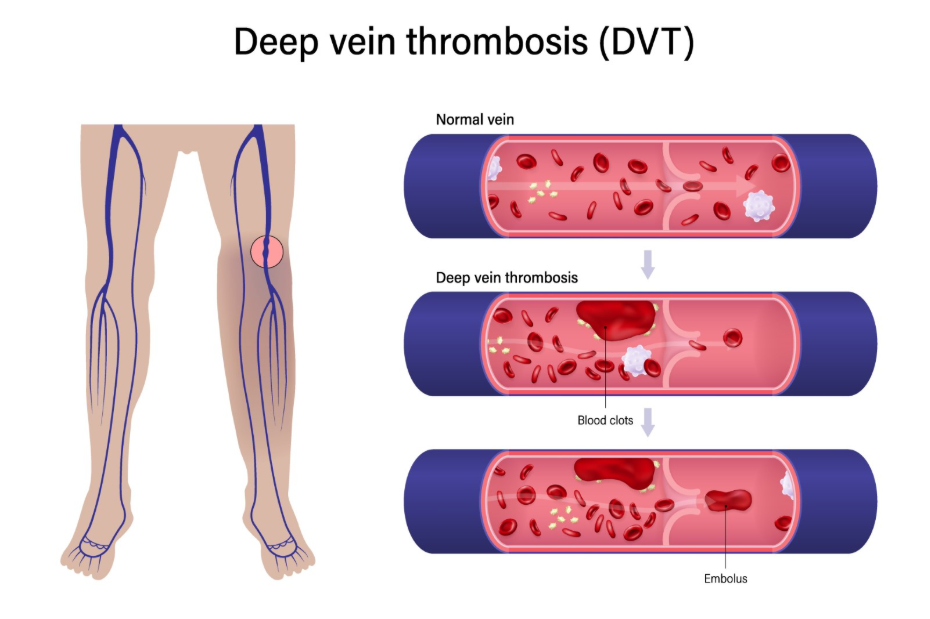
Damage to the internal lining of the veins during a surgical procedure can directly trigger the formation of a thrombus as platelets and fibrin congregate to repair the site of the incision or manipulation. In the United Kingdom, healthcare professionals recognise that even if the surgery is not performed directly on a vein, the systemic inflammatory response to tissue trauma initiated a sequence of cellular recruitment throughout the circulatory system. NICE clinical guidelines indicate that the assessment of venous thromboembolism risk in surgical patients is a central component of identifying clotting triggers to maintain systemic stability.
| Surgical Factor | Biological Impact | Effect on Clotting Risk |
| Tissue Trauma | Releases pro-clotting proteins. | Increases blood hypercoagulability. |
| Vessel Manipulation | Damages the vein lining (endothelium). | Direct site for thrombus initiation. |
| Inflammation | Systemic immune system activation. | Promotes a state of active coagulation. |
| Blood Loss | Can lead to localised venous stasis. | Slows the flow of blood in deep veins. |
Identifying these regional triggers helps the multidisciplinary team provide a secure environment for health maintenance. In the UK, the focus is on providing a safe and accurate understanding of the individual functional capability across different life stages. This professional oversight is essential for building long-term health wellbeing through the systematic identification of circulatory triggers and the provision of specialist advice on achieving biological homeostasis during the postoperative period.
Impact of General Anaesthesia and Immobility
General anaesthesia and the subsequent period of bed rest increase the risk of blood clots by suppressing the calf muscle pump, which is the mechanical system responsible for returning blood from the legs to the heart. In the United Kingdom, healthcare professionals identify that when an individual is unconscious or immobile, blood pools in the deep veins of the lower limbs, which initiated a sequence of stasis that allows solid masses to form. The GOV.UK health pages provide clinical profiles indicating that the monitoring of biological markers for venous stasis in surgical patients is a priority for ensuring integrated support.
As the blood remains stationary, the sequence of clotting follows the lack of muscular assistance to move fluid upward against gravity. In the UK, the focus is on providing a stable foundation for the individual to move forward with self-understanding of their physical state. The NHS ensures that adults have a consistent point of contact for their health needs while they navigate recovery from surgery. By utilised these integrated pathways, the healthcare system provides a secure environment for building long-term health wellbeing across the UK population. This integrated approach ensures that every person functional capability is respected and that clotting triggers are addressed through coordinated medical observation within the national framework.
The Risk Window Following Hospital Discharge
The risk of developing a deep vein thrombosis or pulmonary embolism does not end when the patient leaves the hospital; the biological window of increased vulnerability can persist for several weeks as the body continues to heal. In the United Kingdom, healthcare professionals identify that individuals remain at an elevated risk for up to ninety days following a major operation, particularly if their mobility remains restricted or they have other underlying health factors.
Factors that influence the post-surgical risk window in the UK include:
- Duration of Surgery: Procedures lasting longer than ninety minutes carry a higher risk profile.
- Type of Surgery: Orthopaedic and pelvic operations involve the highest biological risk.
- Postoperative Mobility: How quickly the individual returns to their baseline activity levels.
- Hydration Status: Maintaining fluid balance to prevent thickened blood.
- Underlying Conditions: Pre-existing health issues like cancer or previous blood clots.
- Age and Weight: Increased pressure on veins in older or overweight individuals.
- Medication Use: Adherence to preventative blood thinners provided by the hospital.
In the UK, the focus is on providing a stable foundation for the individual to move forward with self-understanding. The NHS ensures that adults and children have a consistent point of contact for their health needs. By utilised these integrated pathways, the healthcare system provides a secure environment for building long-term health wellbeing across the UK population. These strategies aim to work with the individual biology to restore stability through the consistent clinical control of their environment and the systematic identification of the mechanical triggers of the circulatory system within the national framework.
Standard UK Protocols for Preventative Care
The United Kingdom healthcare system utilise a sequence of investigative protocols and preventative measures, such as anticoagulant medication and mechanical supports, for every patient undergoing major surgery. In the United Kingdom, healthcare professionals focus on ensuring that venous thromboembolism risk is managed systematically to achieve biological homeostasis and provide an accurate physiological understanding of the vascular system state.
Preventative steps in the UK include:
- VTE Risk Assessment: A mandatory assessment performed before any surgical admission.
- Pharmacological Prophylaxis: Using low-dose blood thinners to prevent clot formation.
- Mechanical Prophylaxis: Wearing anti-embolism stockings to support leg circulation.
- Early Mobilisation: Encouraging patients to walk as soon as possible after surgery.
- Intermittent Compression: Using inflatable sleeves during surgery to mimic the calf pump.
- Active Surveillance: Scheduled monitoring during clinical reviews to identify early signs.
- Patient Education: Providing guidance on symptoms like leg swelling or breathlessness.
In the UK, the focus is on providing a stable foundation for the individual to move forward with self-understanding. The NHS ensures that adults and children have a consistent point of contact for their health needs. By utilised these integrated pathways, the healthcare system provides a secure environment for building long-term health wellbeing across the UK population. These strategies aim to work with the individual’s biology to restore stability through the consistent clinical control of their circulatory health and the promotion of a sustainable lifestyle within a validated medical environment.
Conclusion
Surgery follows a biological sequence that increases the risk of blood clots through tissue trauma and reduced mobility within the established UK healthcare framework. The NHS and professional bodies provide a robust system of multidisciplinary assessments to help individuals achieve stability and resilience throughout their health journey. By focusing on both the consistent monitoring of circulatory health and the recognition of red flags, the system promotes the highest possible level of independence. Following a coordinated management plan with the help of medical experts ensures that unique adult needs are addressed holistically.
If you experience severe, sudden, or worsening symptoms, call 999 immediately.
Why is hip or knee surgery higher risk than other types?
In the UK, specialists explain that these operations involve significant manipulation of the large veins in the legs and long periods of reduced movement.
Do I still need to worry about clots if my surgery was keyhole?
In the UK, while keyhole surgery often allows for faster mobility, the biological response to trauma still initiated a temporary increase in clotting risk.
How long do I need to wear compression stockings after surgery?
In the UK, you are usually advised to wear them until you have returned to your normal level of activity, which follows a sequence of clinical recovery.
Can I get a blood clot if my surgery was on my arm?
Yes; in the UK, although leg clots are more common, the systemic response to any surgery can initiated a state where clots form in the deep veins.
What is the first sign of a blood clot after surgery?
In the UK, the most common early signs are unilateral swelling, redness, and a cramping pain in the calf or thigh that does not go away.
Will the blood thinners I am given make me bleed too much?
In the UK, doctors carefully balance the dose to prevent clots without causing dangerous bleeding, which requires regular clinical monitoring.
Who should I talk to if I am worried about my risk before an operation?
The first point of contact in the United Kingdom is your surgical team or pre-assessment nurse to discuss your specific risk profile and preventative plan.
Authority Snapshot (E-E-A-T)
This article provides medically factual health education regarding the relationship between surgery and blood clot risks, strictly aligned with NHS and NICE clinical guidelines. The content is developed by a professional medical writing team and reviewed by Dr. Stefan Petrov, a UK-trained physician with experience in general medicine, surgery, anaesthesia, ophthalmology, and emergency care. All information follows current UK public health protocols to ensure clinical accuracy and patient safety.



