




Most minor head injuries result in a concussion, which is a temporary functional disturbance that does not require a brain scan. Medical imaging is reserved for cases where there is a risk of a serious internal complication, such as a bleed or a fracture, which must be identified urgently to prevent further damage. Understanding the specific clinical indicators that warrant a scan can help patients and families navigate an emergency department assessment with greater clarity.
What We’ll Discuss in This Article
- Why a brain scan is not usually necessary for a standard concussion.
- The specific clinical criteria used in the UK to decide if a CT scan is needed.
- How doctors differentiate between functional and structural brain injuries.
- A comparison of CT and MRI scans for head injury assessment.
- When to seek immediate emergency care following a head impact.
- The importance of the 48 hour clinical observation window.
Why most concussions do not require a brain scan
A brain scan is not usually needed for a standard concussion because it is a functional injury that does not show up on CT or MRI images. A concussion is a temporary injury to the brain caused by a bump, blow, or jolt to the head that disrupts normal brain activity but does not typically involve visible structural damage like a bleed or a skull fracture. Because the injury occurs at a cellular level, standard medical imaging will often appear completely normal, even if the person is experiencing significant symptoms such as dizziness, confusion, or a headache.
Doctors in the UK follow a “clinical assessment” model rather than a “scan everyone” model. This is because CT scans involve a small dose of radiation, which is avoided unless there is a clear medical justification. If a person is alert, speaking clearly, and shows no neurological “red flags,” the risk of having a serious internal injury is extremely low. In these cases, the most effective treatment is physical and cognitive rest, rather than diagnostic imaging.
The clinical criteria for an emergency CT scan
The National Institute for Health and Care Excellence provides specific clinical standards that UK doctors use to decide if a patient needs a CT scan within 1 hour or 8 hours of their injury. These rules are based on years of medical evidence and are designed to catch serious injuries like intracranial bleeds as quickly as possible. During a hospital assessment, a clinician will calculate a Glasgow Coma Scale (GCS) score and look for specific indicators of high-risk trauma.
According to these standards, a CT scan is usually required within one hour if any of the following are present:
- A GCS score of less than 13 on initial assessment in the emergency department.
- A GCS score of less than 15 when assessed two hours after the injury.
- Suspected open or depressed skull fracture (where the bone is pushed inward).
- Any sign of a basal skull fracture, such as bruising behind the ears or “panda eyes.”
- A seizure (fit) that occurs after the impact.
- A focal neurological deficit, such as weakness in an arm or leg.
- More than one episode of vomiting in an adult.
If none of these are present but the patient has experienced a loss of consciousness or amnesia, and they are over 65 or have a blood clotting disorder, they may still require a scan within eight hours of the injury.
Comparing CT and MRI scans for head trauma
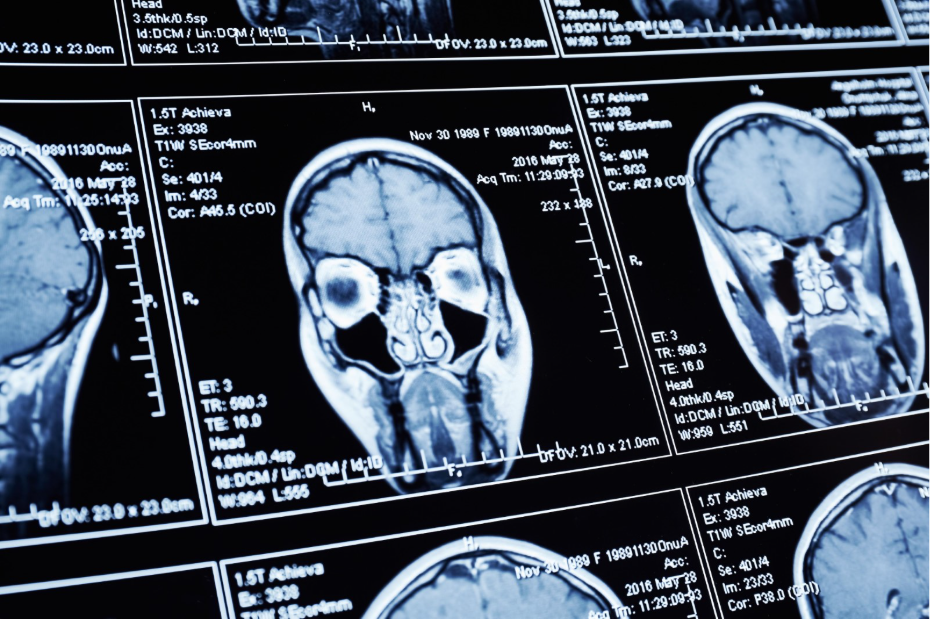
In an emergency setting, a CT scan is almost always the first choice for assessing a head injury because it is faster and more effective at identifying acute bleeding and bone fractures. An MRI scan is generally reserved for later stages of recovery or when symptoms persist, as it provides more detailed images of the brain’s soft tissues and can detect subtle changes that a CT scan might miss.
| Feature | CT Scan (Computed Tomography) | MRI Scan (Magnetic Resonance Imaging) |
| Speed | Very fast (seconds). | Slower (20 to 45 minutes). |
| Best For | Acute bleeding and skull fractures. | Soft tissue detail and old injuries. |
| Availability | Widely available in UK A&E departments. | Often requires a scheduled appointment. |
| Patient Experience | Simple and open; no magnet. | Noisy and enclosed; involve strong magnets. |
| Primary Use | Emergency “life or death” screening. | Secondary assessment for persistent symptoms. |
Why clinical observation is more important than imaging
For the majority of patients who have sustained a minor head injury, the most important part of the care plan is careful observation by a responsible adult for at least 48 hours. Because symptoms of a serious complication can develop slowly as pressure builds inside the skull, the absence of a visible bleed on an initial scan does not mean the person is entirely out of danger. Continuous monitoring for worsening headaches, increased drowsiness, or changes in behaviour is the most effective way to ensure a safe recovery.
Observation is particularly important because a concussion is a “functional” injury. This means the brain’s “wiring” and chemical balance are disrupted, even if the “hardware” (the physical structure seen on a scan) remains intact. There is no scan currently available in routine clinical practice that can “see” a concussion. Therefore, medical professionals rely on the patient’s symptoms and their progress over time to guide the recovery process rather than relying solely on a picture of the brain.
Understanding the risks of unnecessary imaging
While it is natural to want a scan for peace of mind, UK medical guidelines emphasize that imaging should only be performed when clinically necessary. CT scans use X-rays to create detailed images, which involves exposure to a small amount of ionising radiation. While the risk from a single scan is very low, doctors aim to minimise cumulative exposure, especially in children and young adults, unless the potential benefit of finding a serious injury outweighs the small risk.
Furthermore, a “clear” scan can sometimes give a false sense of security. A patient with a clear CT scan can still have a significant concussion that requires several weeks of rest. Relying too heavily on imaging can lead to a person returning to work or sports too early, which increases the risk of sustaining a second injury before the first has healed. The focus of UK healthcare is to treat the patient and their symptoms, ensuring a safe and gradual return to normal life.
Conclusion
Most concussions do not require a CT or MRI scan as they are functional injuries that do not involve structural damage to the brain. Scans are reserved for cases where there are clear red flags, such as repeated vomiting, seizures, or a reduced level of consciousness, that suggest a risk of internal bleeding or a skull fracture. Following the 48 hour observation period and allowing for total physical and cognitive rest is the best way to support a full and safe recovery.
If you experience severe, sudden, or worsening symptoms, call 999 immediately.
Can I request a CT scan if I am worried?
Doctors follow strict clinical guidelines to decide if a scan is necessary, and they will only perform one if you meet specific high-risk criteria to avoid unnecessary radiation exposure.
Is an MRI better than a CT scan for a concussion?
A CT scan is better for identifying life-threatening emergencies like bleeding, while an MRI is better for looking at subtle, long-term changes in the brain tissue.
Why didn’t the hospital scan me if I hit my head hard?
If you are fully alert, have no neurological deficits, and do not show red-flag symptoms, the statistical risk of a brain bleed is extremely low, making a scan unnecessary.
Does a clear brain scan mean I don’t have a concussion?
No, a standard CT or MRI scan cannot detect a concussion; it only rules out structural damage like a bleed or a bone fracture.
How soon after the injury is a scan usually done?
If you meet the high-risk criteria, UK guidelines state that a CT scan should be performed within one hour of your arrival at the hospital.
Will a scan help me recover from my symptoms faster?
No, a scan only identifies injuries that might need surgery or intensive monitoring; the recovery from the concussion itself requires rest and time.
Are scans different for children?
Yes, doctors are even more cautious with children to limit radiation exposure, and they use specific pediatric observation rules before deciding if a scan is required.
Authority Snapshot (E-E-A-T Block)
This article was created by the Medical Content Team and reviewed by Dr. Stefan Petrov to provide safe, evidence-based information for the public. The content is strictly aligned with the clinical assessment standards and imaging guidelines established by the NHS and the National Institute for Health and Care Excellence (NICE). Our goal is to ensure that patients understand the medical criteria for brain imaging after a head injury and follow safe, UK-recognised recovery pathways.



