
How Long Do Repaired Valves Typically Last?
For many patients with heart valve disease, a surgical ‘repair’ is often preferred over a full ‘replacement.’ Repairing your own natural valve tissue preserves the heart’s anatomy and avoids many of the long-term complications associated with artificial valves, such as the need for lifelong blood thinners. However, a common question for those facing surgery is: ‘How long will it last?’ In the UK, valve repair is considered a highly durable solution, with many repairs lasting the rest of a patient’s life. However, durability is not guaranteed and depends on the specific valve involved and the nature of the original damage. This article explores the typical longevity of repaired valves and what you can do to ensure your repair stays healthy for as long as possible.
What We’ll Discuss in This Article
• The typical lifespan of a repaired heart valve compared to a replacement.
• Why the mitral valve is the most commonly and successfully repaired valve.
• Factors that influence how long a repair remains effective.
• The role of the ‘annuloplasty ring’ in maintaining the shape of a repair.
• How underlying heart disease can impact the longevity of the surgical fix.
• Specific triggers that suggest a repair may be failing or leaking.
• Differentiation between ‘structural’ repair failure and ‘functional’ issues.
How Long Heart Valve Repairs Remain Effective?
A successfully repaired heart valve, particularly the mitral valve, can typically last between 15 and 20 years, with many patients never requiring a second operation. Data from the UK suggests that for degenerative mitral valve disease, approximately 90% to 95% of repairs are still functioning perfectly 10 years after surgery. The longevity of a repair is generally superior to that of biological (tissue) replacements, which often begin to wear out after 10 to 15 years.
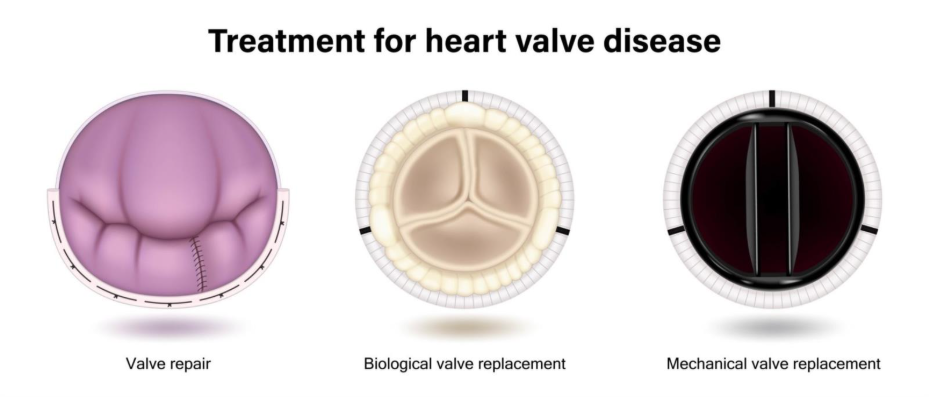
The success of a repair depends heavily on the surgeon’s expertise and the quality of the patient’s existing valve tissue. While the mitral valve is highly suited to repair, other valves, such as the aortic valve, are more difficult to fix and may have shorter durability timelines. Regular monitoring via echocardiogram is the standard way the NHS ensures a repair remains stable over the decades.
• Mitral Valve: The ‘gold standard’ for repair; often lasts 20+ years.
• Tricuspid Valve: Frequently repaired during other heart surgeries with good long-term results.
• Aortic Valve: More complex to repair; durability varies but is generally lower than mitral repair.
• Annual Review: Lifelong cardiology follow-up is essential to monitor for any return of leaks.
What Factors Influence Repair Longevity?
The most significant factor in how long a repair lasts is the ‘mechanism’ of the original valve failure. If the valve failed due to a physical tear (prolapse), a surgical fix is often very durable. However, if the valve failed because the heart muscle itself is enlarged or scarred (functional disease), the repair may be under constant strain and could fail sooner if the underlying heart condition continues to worsen.
[Image showing the difference between a valve prolapse and a dilated heart chamber]
• The Annuloplasty Ring: Most repairs use a cloth-covered metal or plastic ring to reinforce the valve’s base; this prevents the valve from stretching out again.
• Patient Age: Younger patients may put more physical demand on a repair, but they also have healthier tissue that heals more robustly.
• Blood Pressure Control: High blood pressure acts as a physical force that can ‘pull’ at a repair, potentially shortening its lifespan.
• Surgical Technique: Using your own tissue (autologous) rather than synthetic patches often leads to better long-term integration.
What are the Main Causes of Repair Failure?
The main cause of a repair failing over time is the ‘progression’ of the patient’s underlying heart disease. For example, if a patient has ‘myxomatous’ disease (where the valve tissue is naturally weak), new tears can develop in parts of the valve that were not part of the original repair. Additionally, if the heart continues to enlarge due to other conditions like cardiomyopathy, the valve leaflets may eventually be pulled apart, causing a ‘recurrent’ leak.
• Tissue Degeneration: The natural valve tissue continuing to weaken or calcify over time.
• Infection (Endocarditis): Bacteria can settle on the repair site or the annuloplasty ring, leading to rapid failure.
• Suture Issues: In rare cases, the stitches used during the repair can pull through the tissue years later.
• Heart Muscle Dilation: If the heart becomes larger, it ‘tugs’ at the valve leaflets, preventing them from meeting in the middle.
What are the Triggers for a Repair Review?
Patients with a repaired valve must stay alert for ‘triggers’ that suggest the valve is leaking again (regurgitation). The return of symptoms you had before your surgery such as breathlessness when lying flat or during exercise is a primary trigger. In the UK, if your GP hears a new heart murmur during a routine check-up, they will trigger an urgent referral for an echocardiogram to assess the repair’s integrity.
• New Breathlessness: Finding it harder to walk up hills or carry groceries.
• Palpitations: A feeling that the heart is racing or skipping beats (potential atrial fibrillation).
• Ankle Swelling: A sign that the heart may be struggling to manage fluid due to a leak.
• Unexplained Fatigue: Feeling exhausted after normal daily tasks.
Differentiation: Repair Longevity vs. Replacement Durability
It is vital to differentiate between the longevity of a ‘repaired’ natural valve and the durability of an ‘artificial’ replacement. A repair uses your own living tissue, which can theoretically last a lifetime and is more resistant to infection. A replacement uses man-made materials or animal tissue, both of which have specific ‘expiry dates’ or require lifelong medication (like Warfarin for mechanical valves) to prevent failure.
| Feature | Repaired Natural Valve | Biological (Tissue) Replacement |
| Typical Lifespan | 15 to 25+ years. | 10 to 15 years. |
| Material | Your own valve tissue + a ring. | Pig, cow, or horse heart tissue. |
| Infection Risk | Lower (living tissue). | Higher (foreign material). |
| Blood Thinners | Usually not required long-term. | Usually not required long-term. |
| Future Surgery | Can often be repaired again or replaced. | Often requires TAVI or new surgery. |
Conclusion
A repaired heart valve is often the best long-term solution for valvular disease, offering excellent durability that frequently exceeds 15 to 20 years. By preserving your own tissue, surgeons can maintain your heart’s natural function while fixing the underlying leak or narrowing. However, the longevity of your repair depends on managing your overall heart health, particularly your blood pressure. In the UK, the NHS provides lifelong monitoring via echocardiograms to ensure that your repair remains secure and that you can enjoy an active life for decades to come.
If you experience severe, sudden, or worsening symptoms such as intense chest pain, fainting, or extreme breathlessness, call 999 immediately.
Will I need a second operation eventually?
Many patients with a mitral valve repair never need a second operation, but about 5% to 10% may require further treatment within 10 to 20 years.
Does a repaired valve feel different?
No, a repaired valve feels like your own heart; unlike mechanical valves, a repair does not make a ‘ticking’ sound.
Can a repaired valve get infected?
Yes, while the risk is lower than with an artificial valve, you are still at higher risk of endocarditis and must maintain excellent dental hygiene.
Can I exercise fully with a repaired valve?
Yes, once you have recovered from surgery and been cleared by your UK cardiology team, most patients can return to full physical activity.
Do I need blood thinners for a repair?
You may need blood thinners (like aspirin or Warfarin) for a few months after surgery while the annuloplasty ring heals, but usually not lifelong.
Why is my aortic valve being replaced instead of repaired?
The aortic valve is under much higher pressure than the mitral valve, making repairs more technically difficult and often less durable over time.
Authority Snapshot (E-E-A-T Block)
This article has been reviewed by Dr. Stefan Petrov, a UK-trained physician with an MBBS and postgraduate certifications in Basic Life Support (BLS) and Advanced Cardiac Life Support (ACLS). Dr. Petrov has extensive clinical experience in surgical wards and intensive care units, where he has monitored the long-term outcomes of patients following cardiac valve repairs. This guide follows NHS, NICE, and British Heart Foundation standards to provide medically accurate timelines for valve repair durability.
