
What Causes Aortic Stenosis?
The aortic valve is the ‘gateway’ of the heart, opening to allow blood to be pumped into the aorta and out to the rest of the body. Aortic stenosis occurs when this gateway becomes narrow and restricted, forcing the heart to work much harder to circulate blood. While many people think of this as a condition that simply ‘happens’ with age, there are several distinct medical reasons why a valve might fail. Understanding the underlying cause is essential, as it often determines how quickly the condition will progress and what the best treatment path will be. This article explores the biological and environmental factors that lead to the narrowing of the aortic valve.
What We’ll Discuss in This Article
- The primary causes of aortic stenosis, from ageing to congenital defects.
- How ‘calcification’ physically changes the valve leaflets over time.
- The impact of a bicuspid aortic valve on heart health in younger adults.
- The role of previous infections, such as rheumatic fever, in valve damage.
- Lifestyle and metabolic factors that can accelerate valve narrowing.
- The difference between degenerative and inflammatory causes.
What are the Primary Causes of Aortic Stenosis?
The most common cause of aortic stenosis is ‘calcific degeneration’, which is the gradual buildup of calcium on the valve flaps over many decades. Other significant causes include being born with a ‘bicuspid’ aortic valve (having two flaps instead of three) and scarring from a previous bout of rheumatic fever. In rare cases, infections like endocarditis or radiation therapy to the chest can also cause the valve to narrow.
In the UK, the majority of cases are related to ageing. However, for those diagnosed under the age of 60, a congenital (birth) defect is the most frequent cause. Regardless of the trigger, the end result is a valve that is too stiff to open fully, obstructing the heart’s output.
- Ageing: The cumulative effect of mechanical stress over a lifetime.
- Congenital Defects: Abnormal valve shapes present from birth.
- Inflammation: Scarring caused by previous autoimmune or bacterial triggers.
- Mineralisation: The conversion of soft valve tissue into hard, bone-like structures.
How Does Ageing Cause Aortic Stenosis?
Ageing causes aortic stenosis through a process called ‘calcification’. For decades, the aortic valve opens and closes approximately 100,000 times a day. This constant mechanical stress causes microscopic injuries to the valve leaflets. The body’s attempt to repair these injuries involves inflammation and the deposition of calcium minerals. Over time, these minerals harden, turning thin, flexible flaps into thick, rigid structures that cannot move freely.
This process is very similar to how plaque builds up in the arteries (atherosclerosis). Because it takes many years for enough calcium to accumulate to block blood flow, symptoms usually do not appear until a person is in their 70s or 80s.
- Tissue Thickening: The initial stage where the valve flaps lose their delicate edges.
- Nodule Formation: Small lumps of calcium begin to appear on the surface of the valve.
- Reduced Mobility: The weight and stiffness of the calcium prevent the valve from opening wide.
What is a Bicuspid Aortic Valve?
A bicuspid aortic valve is a congenital cause of stenosis where a person is born with only two leaflets (flaps) on their aortic valve instead of the normal three. Because the valve shape is abnormal, blood flow through it is turbulent rather than smooth. This extra turbulence causes the valve to wear out much faster than a normal valve, often leading to significant narrowing in a person’s 40s, 50s, or 60s.
It is estimated that about 1% to 2% of the population is born with a bicuspid valve. While it may function perfectly for decades, the increased mechanical stress eventually triggers the same calcification process seen in older adults, but at a much earlier age.
- Genetic Link: This condition often runs in families, suggesting a hereditary component.
- Structural Strain: The two flaps must do the work of three, leading to early scarring.
- Associated Risks: People with bicuspid valves are also at higher risk for issues with the aorta (the main artery).
How Does Rheumatic Fever Cause Valve Damage?
Rheumatic fever is an inflammatory disease that can develop after a streptococcal throat infection. While now rare in the UK, it remains a cause of aortic stenosis in older adults or those who grew up in developing nations. The body’s immune response to the infection mistakenly attacks the heart valves, causing the edges of the leaflets to fuse together (commissural fusion). This creates a permanent, narrowed opening.
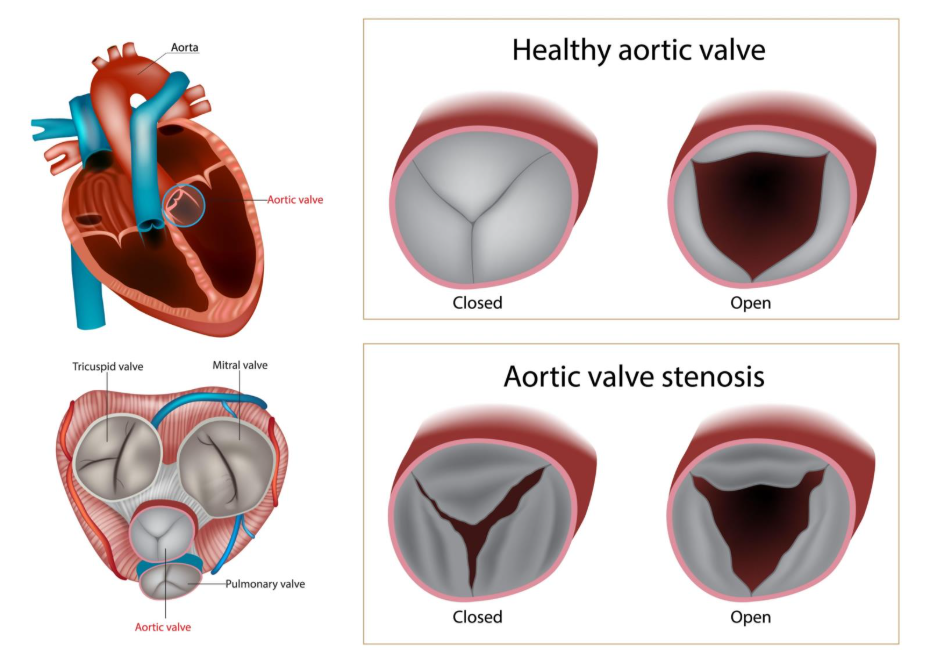
Unlike age-related calcification, which usually just stiffens the flaps, rheumatic disease often causes the flaps to stick to one another. This can lead to a ‘double’ problem where the valve cannot open fully (stenosis) and cannot close tightly (regurgitation).
- Leaflet Fusion: The ‘seams’ of the valve flaps grow together.
- Scar Tissue: The flexible tissue is replaced by tough, non-elastic collagen.
- Long Latency: The damage often happens in childhood, but the stenosis may not become severe until decades later.
What are the Lifestyle Triggers for Aortic Stenosis?
While the primary causes are structural, certain lifestyle and metabolic factors act as ‘triggers’ that can speed up the calcification process. High blood pressure (hypertension) increases the force with which the heart pumps, putting more mechanical stress on the valve. High cholesterol and diabetes contribute to a state of chronic inflammation in the blood, which encourages calcium to settle on the valve tissue more rapidly.
- Smoking: Introduces toxins that damage the lining of the heart and accelerate tissue stiffening.
- Chronic Kidney Disease: Changes in how the body processes calcium and phosphate can lead to rapid valve hardening.
- Radiation Therapy: Patients who have had radiation to the chest (e.g., for Hodgkin’s lymphoma) may develop valve scarring years later.
Differentiation: Degenerative vs. Congenital Stenosis
It is important to differentiate between ‘degenerative’ (age-related) and ‘congenital’ (from birth) stenosis, as the timing and management can differ. Degenerative stenosis is the result of a long life well-lived, affecting a normally shaped valve. Congenital stenosis is the result of an architectural flaw in the valve itself. Both lead to the same symptoms, but the ‘starting point’ of the disease is different.
| Feature | Degenerative (Age-Related) | Congenital (Bicuspid Valve) |
| Valve Shape at Birth | Normal (3 leaflets). | Abnormal (2 leaflets). |
| Typical Age of Onset | 70s and 80s. | 40s to 60s. |
| Primary Mechanism | Cumulative wear and tear. | Turbulent flow due to shape. |
| Family History | Generally less significant. | Often has a strong genetic link. |
Conclusion
Aortic stenosis is primarily caused by the gradual calcification of the valve over time, a process often accelerated by ageing or lifestyle factors like high blood pressure. However, congenital defects like a bicuspid aortic valve and previous infections like rheumatic fever remain significant causes, particularly in younger patients. Regardless of the cause, the resulting narrowing restricts blood flow and places a heavy burden on the heart. Monitoring and early identification are key to managing the progression of the disease.
If you experience severe, sudden, or worsening symptoms, such as intense chest pain, sudden breathlessness, or fainting, call 999 immediately.
Can a heart attack cause aortic stenosis?
No, a heart attack is caused by blocked arteries. While a heart attack can damage the heart muscle, it does not physically cause the aortic valve to narrow.
Is aortic stenosis caused by eating too much calcium?
No, the calcium that builds up on heart valves is not related to the calcium in your diet or supplements; it is part of an internal inflammatory process.
Can children have aortic stenosis?
Yes, but in children, it is almost always due to a congenital defect where the valve didn’t form correctly in the womb.
Is aortic stenosis the same as ‘hardening of the arteries’?
They are very similar processes (calcification and inflammation), and people with hardened arteries are often more likely to develop aortic stenosis.
Can exercise prevent the causes of aortic stenosis?
Exercise cannot change a bicuspid valve or stop the ageing process, but it helps manage blood pressure, which can slow down the speed of valve wear.
Why is it called ‘stenosis’?
‘Stenosis’ is a medical term derived from Greek that simply means ‘narrowing’ or ‘constriction’ of a passage.
Authority Snapshot (E-E-A-T Block)
This article has been reviewed by Dr. Stefan Petrov, a UK-trained physician with extensive experience in general medicine, surgery, and intensive care. Drawing on his clinical background in treating age-related and congenital cardiac conditions in hospital wards and ICUs, this guide provides a medically accurate overview of the various causes of aortic stenosis. Our goal is to provide safe, factual information based on NHS and NICE principles to help you understand the development of this heart valve condition.
