




Basal cell carcinoma is widely recognised in the United Kingdom as a form of skin cancer that behaves very differently from more aggressive malignancies such as melanoma. While other cancers frequently use the bloodstream or the lymphatic system to migrate to distant organs, basal cell carcinoma remains almost entirely a locally invasive disease. This means that while it can cause significant damage to the skin and underlying structures where it first appears, the risk of it spreading to the lymph nodes or internal organs is extremely low. Understanding the biological reasons for this local behaviour is essential for patients navigating a diagnosis and treatment plan within the National Health Service.
What We’ll Discuss in This Article
- The statistical rarity of metastatic basal cell carcinoma
- How local invasion differs from distant spreading
- The biological reasons why these cells rarely survive in the bloodstream
- Identifying the rare high-risk scenarios where spread is possible
- The role of the lymphatic system in skin cancer monitoring
- Why early local treatment remains the priority for long term safety
The statistical rarity of distant spread
In the clinical landscape of British dermatology, the spread of basal cell carcinoma to distant sites, a process known as metastasis, is considered an exceptionally rare event. Research suggests that the incidence of metastatic basal cell carcinoma is between 0.0028 per cent and 0.55 per cent of all cases. For the vast majority of patients in the UK, the disease will stay confined to the specific area of skin where it first developed.
The National Health Service explains that basal cell carcinoma is a non melanoma skin cancer that is very unlikely to spread to other parts of the body, although it can grow into deeper layers of the skin if left untreated. Because the risk of distant spread is so low, clinicians do not typically perform routine scans of the lymph nodes or internal organs after a diagnosis. Instead, the focus remains firmly on ensuring that the primary lesion is completely removed to prevent it from causing further local tissue destruction.
Local invasion versus systemic metastasis
It is important to distinguish between a cancer being invasive and a cancer spreading to other organs. Basal cell carcinoma is highly locally invasive, meaning it can grow downwards and sideways into the healthy tissues surrounding it. If ignored, a lesion can eventually reach the underlying muscle, cartilage, or bone. This process can be very destructive to the face or other delicate features, but it is still fundamentally different from metastasis.
Metastasis occurs when cancer cells break away from the original tumour, enter the blood or lymph vessels, and travel to a new part of the body to grow. Most basal cell carcinomas lack the biological ability to survive this journey. These cells are highly dependent on the specific environment of the skin and the local connective tissue to grow. Once they are removed from that environment and enter the circulatory system, they usually die before they can establish a new colony elsewhere.
Rare high-risk scenarios for spreading
While spreading is extremely rare, clinicians in the UK are trained to identify a very small group of high-risk cases where the probability is slightly higher. These rare instances are usually associated with tumours that have been neglected for many years, allowing them to grow to a very large size, often greater than several centimetres in diameter. Large, deep, and long-standing tumours that have repeatedly returned after surgery are the most likely candidates for potential spread.
Certain aggressive subtypes, such as the infiltrative or morphoeic patterns, also carry a marginally higher risk compared to the standard nodular type. Additionally, patients who are severely immunocompromised, such as those who have had organ transplants or are living with certain chronic illnesses, may have a slightly higher risk because their immune system is less able to contain the cancer locally. Even in these high-risk groups, however, the chance of the cancer reaching the lymph nodes remains statistically very small.
The role of the lymphatic system in monitoring
The lymphatic system is a network of vessels and nodes that helps the body fight infection and acts as a primary route for many cancers to spread. In the rare cases where basal cell carcinoma does spread, it most frequently reaches the local lymph nodes first. A specialist might gently feel the lymph nodes in your neck, armpits, or groin during an examination if they are managing a particularly large or aggressive tumour.
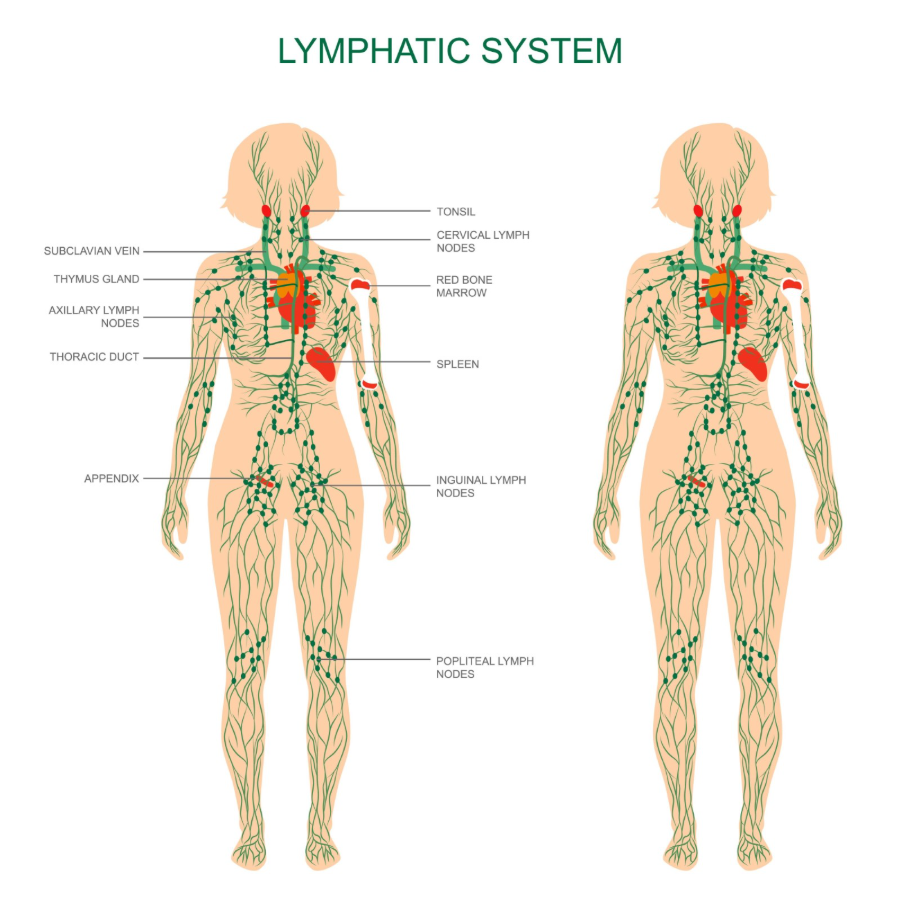
NICE clinical guidelines suggest that a professional examination of the local lymph nodes is only required for a small minority of patients who have very high risk or advanced primary tumours. If a lymph node feels firm, enlarged, or fixed in place, a doctor may recommend an ultrasound scan or a needle biopsy to investigate further. For the overwhelming majority of people with a standard basal cell carcinoma, the lymph nodes will be entirely healthy and unaffected by the skin condition.
Focus on early local treatment
Because basal cell carcinoma is almost always a local problem, the priority for healthcare providers is early and complete local treatment. Removing the tumour while it is still small and superficial is the most effective way to ensure a total cure and prevent any long-term complications. This is typically achieved through surgical excision, where the lesion and a small margin of healthy skin are removed under a local anaesthetic.
In areas where tissue conservation is vital, such as the eyelids or nose, Mohs micrographic surgery may be used to ensure every cancer cell is removed while keeping the wound as small as possible. By focusing on achieving clear margins during the first treatment, clinicians can effectively eliminate the risk of the cancer returning or growing deeper. This proactive local approach is why the long-term prognosis for patients with basal cell carcinoma in the UK is excellent.
Conclusion
Basal cell carcinoma is a locally invasive skin cancer that very rarely spreads to the lymph nodes or distant organs. While it can cause significant damage to the skin and underlying tissues if left untreated, its biological nature keeps it confined to the original site. Early surgical intervention remains the most effective strategy for ensuring the cancer is fully cleared and preventing any rare complications.
If you experience severe, sudden, or worsening symptoms, call 999 immediately.
Is a large BCC more likely to spread than a small one?
Statistically, yes, but even very large basal cell carcinomas rarely spread to other organs and usually only cause local tissue damage.
Why does melanoma spread while BCC usually does not?
Melanoma cells have specific genetic mutations that allow them to survive in the bloodstream and attach to other organs, which BCC cells generally lack.
Do I need a CT scan if I have been diagnosed with BCC?
Routine scans are not recommended for standard basal cell carcinoma as the risk of internal spread is too low to justify the procedure.
What happens if a BCC does reach a lymph node?
In this rare event, the affected lymph node would likely be surgically removed, and the patient might be offered further treatments like radiotherapy.
Can BCC grow into the bone?
Yes, if left untreated for many years, it can grow deep enough to involve the bone, but this is still a local invasion rather than a distant spread.
Is my immune system responsible for stopping the spread?
The immune system helps contain the cancer, but the primary reason it does not spread is the biological nature of the cancer cells themselves.
How often do people die from BCC in the UK?
Deaths from basal cell carcinoma are extremely rare and are almost always associated with very advanced, neglected cases in frail or immunocompromised patients.
Authority Snapshot (E-E-A-T)
This article is designed to provide clear and factual information regarding skin health for the general public. The content is written by the Medical Content Team and has been reviewed by Dr. Stefan Petrov. He is a UK-trained physician with an MBBS and postgraduate certifications including Basic Life Support (BLS), Advanced Cardiac Life Support (ACLS), and the UK Medical Licensing Assessment (PLAB 1 & 2). He has hands-on experience in general medicine, surgery, anaesthesia, ophthalmology, and emergency care. Dr. Petrov has worked in both hospital wards and intensive care units, performing diagnostic and therapeutic procedures, and has contributed to medical education by creating patient-focused health content and teaching clinical skills to junior doctors.



