




Yes, hair loss in children can be a form of alopecia, and while it is often distressing for both the child and the parenHow can I track hair loss progression to discuss with my doctor?
Accurately documenting the changes in your hair density is one of the most effective ways to help a UK healthcare professional provide a precise diagnosis. Because hair loss often happens gradually, memory alone is frequently insufficient for determining the speed or pattern of the loss. By using objective tracking methods, you provide your GP or dermatologist with a clear clinical timeline, which is essential for distinguishing between temporary shedding and progressive conditions like androgenetic alopecia.
What We’ll Discuss in This Article
- Establishing a baseline using standardised clinical scales
- The correct way to take medical grade progression photos
- Maintaining a shedding log and identifying triggers
- Using the Hair Pull Test as a consistent at home metric
- Documenting scalp sensations and associated symptoms
- Preparing your History of Loss summary for a consultation
Establishing a Baseline with Clinical Scales
Before you begin tracking, it is helpful to identify where your hair currently sits on a standardised clinical scale. These tools are used by UK doctors to categorise the extent of hair loss.
- For Men (Norwood Scale): This scale tracks the progression of a receding hairline and thinning at the crown.
- For Women (Ludwig Scale): This scale focuses on the widening of the natural part and diffuse thinning across the top of the scalp while maintaining the front hairline.
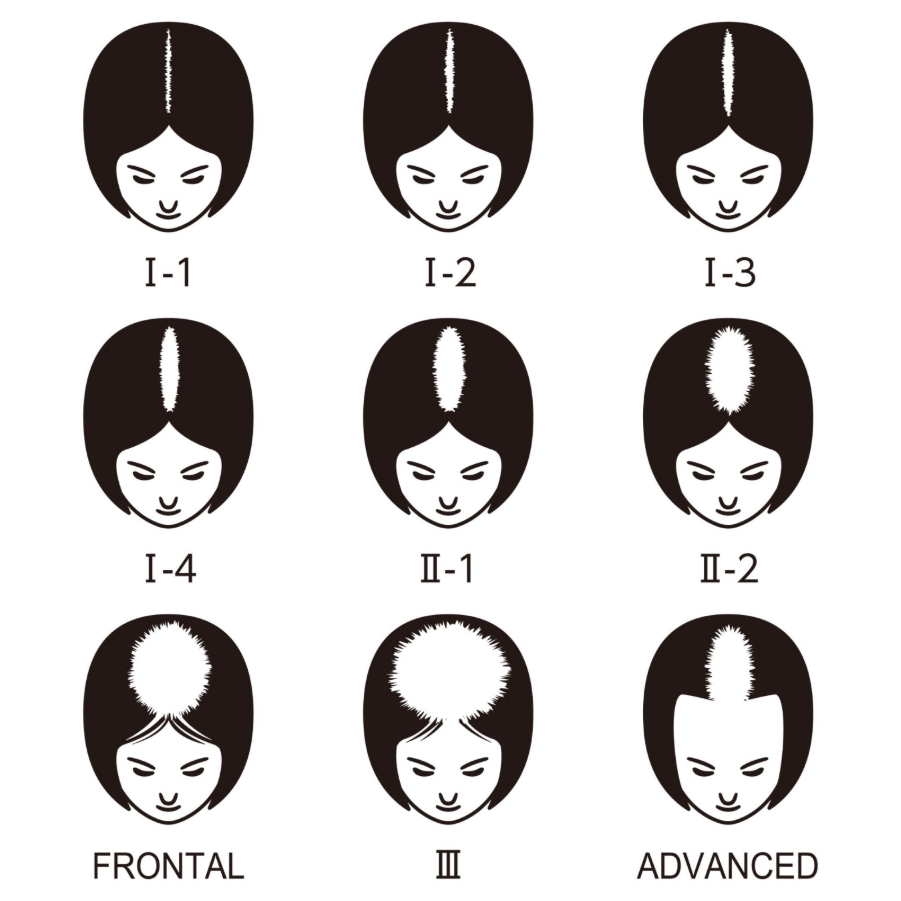
Identifying your current stage allows you and your doctor to monitor whether the condition is stable or moving toward the next stage over several months.
Professional Progression Photography
Photographs are the most reliable way to track visible changes, but they must be consistent to be useful. Inconsistent lighting or angles can create the illusion of loss or regrowth where none exists.
How to take consistent photos:
- Set the Scene: Use the same room and the same natural light source (e.g., facing a window during the day).
- Key Angles: Take four standard shots: the front hairline, the top of the head (birds eye view), the crown (back), and each side profile.
- Consistency: Wear your hair in the same style (dry and unstyled) for every session.
- Frequency: Do not take photos every day. Once a month is the clinical standard, as hair only grows about 1cm per month.
Maintaining a Shedding and Symptom Log
A shedding log helps you identify if your loss is constant or comes in waves. This is particularly useful for diagnosing telogen effluvium (stress related loss).
Record the following in a simple notebook or digital app:
- The Shower Count: Note if the amount of hair in the drain seems Normal, Increased, or Heavy.
- Scalp Sensations: Document any days where you feel itching, burning, or tenderness (trichodynia).
- Lifestyle Overlap: Note major events such as starting new medication, a high fever, significant stress, or changes in diet. The NHS and British Association of Dermatologists emphasize that because of the hair cycle, triggers usually occur two to three months before the shedding starts.
The At Home Pull Test
The Pull Test is a standard diagnostic tool used in UK clinics, and you can perform a modified version at home to monitor active shedding.
How to do it:
- Grasp a small section of about 60 hairs (roughly the thickness of a pencil) near the scalp.
- Slide your fingers firmly but gently to the ends of the hair.
- The Metric: If more than 6 hairs (10 percent) come out, it indicates an active shedding phase.
Perform this test in three different areas (front, top, and back) once a month and record the results.
Preparing Your History of Loss Summary
When you finally sit down with your GP or a specialist, having a one page summary of your tracking data will make the appointment much more efficient. In the UK, a GP consultation is often limited to 10 minutes, so clarity is key.
Your summary should include:
- Onset: When exactly did you first notice the change?
- Rate of Change: Has it been a slow thinning over years or a sudden shedding over weeks?
- Family History: Note which relatives have hair loss and at what age they started.
- Topical History: List any over the counter treatments or supplements you have already tried.
Conclusion
Tracking your hair loss progression is a proactive way to take control of your scalp health and provide your doctor with the evidence they need for an accurate diagnosis. By combining standardised clinical scales with monthly photography and a symptom log, you move away from guesswork and toward data driven care. In the UK, a well documented history of loss allows your GP to bypass common assumptions and focus on the specific patterns and triggers unique to your case. Whether your loss is temporary or genetic, your tracking data will be the foundation upon which a successful management plan is built. If you experience severe, sudden, or worsening symptoms, call 999 immediately.
Is a 10 minute GP appointment long enough to discuss hair loss?
It is often a short window, which is why having your photos and shedding log ready is so important. It allows the doctor to see months of progression in seconds.
Should I count every hair I lose?
No, counting individual hairs is unnecessary and can increase anxiety. Qualitative labels like Heavy or Moderate are sufficient for a clinical history.
Can I use a hair tracking app?
Yes, several apps allow you to store photos and logs securely. Just ensure the lighting in your photos remains identical for every entry.
What if I don’t have any photos from before the loss started?
Check your social media or family photos. Even candid shots can help a doctor see your original hairline or part width for comparison.
How often should I do the pull test?
Once a month is enough. Doing it too often can cause unnecessary stress and may not accurately reflect the overall trend of your hair cycle.
Does wet hair look thinner in photos?
Yes, water clumps hair together and makes the scalp more visible. Always take your progression photos when your hair is dry and clean for the most accurate baseline.
Can I show my GP photos on my phone?
Yes, most UK doctors are happy to look at clear, well lit photos on a screen during a consultation.
Authority Snapshot (E-E-A-T)
This article examines the methodologies for tracking hair loss and is intended for informational and educational purposes. The content has been reviewed by Dr. Stefan Petrov, a UK trained physician, to ensure accuracy and safety. All tracking methods and clinical scales mentioned are aligned with the standards used by the NHS and the British Association of Dermatologists.



