




Many different conditions can affect the mouth, often presenting with similar symptoms such as redness, swelling, or discomfort. While oral thrush is a fungal infection, other common issues like cold sores are viral, and conditions like gingivitis are primarily bacterial. Distinguishing between these is essential because the treatment for a fungal overgrowth is entirely different from the approach used for a viral or bacterial infection.
What We’ll Discuss in This Article
- The fundamental differences in the biological causes of oral infections.
- How the physical appearance of oral thrush differs from other lesions.
- Comparing fungal overgrowth with viral conditions like cold sores.
- Distinguishing between oral thrush and common bacterial gum diseases.
- The difference between thrush and non-infectious mouth ulcers.
- When a professional examination is necessary to confirm a diagnosis.
Fungal vs. Viral Infections
The primary difference between oral thrush and infections like cold sores lies in the type of microorganism involved. Oral thrush is caused by the fungus Candida albicans, which thrives on the moist surfaces inside the mouth. In contrast, cold sores are caused by the Herpes Simplex Virus (HSV) and typically appear on or around the lips rather than inside the cheeks or on the tongue.
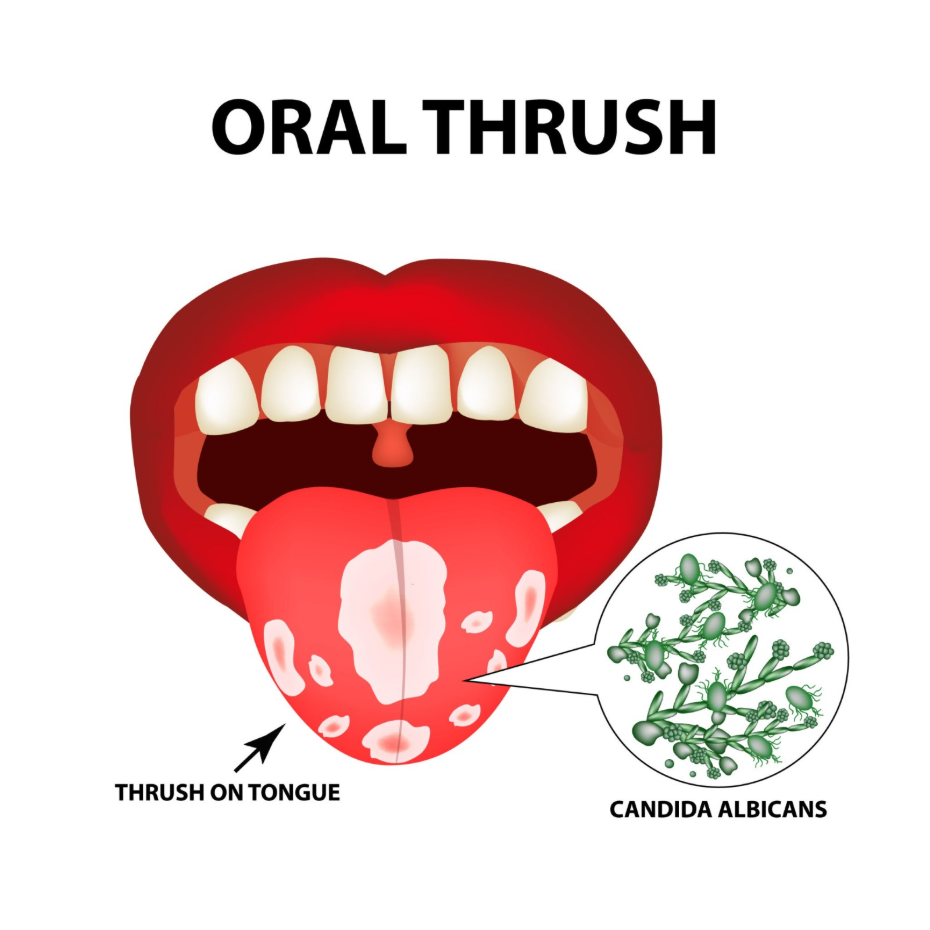
While oral thrush presents as creamy white patches that can sometimes be wiped away, cold sores usually start as a tingling sensation followed by small, fluid-filled blisters that eventually crust over. Fungal infections tend to be more widespread across the mucous membranes, whereas viral lesions like cold sores are often localised and follow a specific healing cycle of blistering and scabbing.
Thrush vs. Bacterial Infections
Bacterial infections in the mouth, such as gingivitis or periodontitis, primarily affect the gums rather than the tongue or inner cheeks. These conditions occur when bacteria in plaque cause inflammation, leading to red, swollen, and bleeding gums. While oral thrush can cause redness, it is usually accompanied by the characteristic white “cottage cheese” deposits which are not present in standard gum disease.
Another bacterial condition is necrotising ulcerative gingivitis, which causes painful, bleeding gums and sometimes a metallic taste or bad breath. While both fungal and bacterial infections can cause discomfort, bacterial infections often require professional dental cleaning or specific antibacterial treatments, whereas thrush requires antifungal intervention.
Distinguishing Thrush from Mouth Ulcers
Mouth ulcers, also known as aphthous ulcers or canker sores, are often confused with oral thrush, but they are generally not infectious. An ulcer is a small, painful sore with a white or yellow centre and a red border, usually found on the inside of the lips or the base of the gums. Unlike thrush, these do not appear as large patches and cannot be wiped away.
Thrush is an overgrowth of an organism, while an ulcer is a break in the lining of the mouth often caused by minor injury, stress, or nutritional deficiencies. If a person has multiple white spots, it is more likely to be thrush; if they have one or two distinct, deeply painful “craters,” it is more likely to be a standard mouth ulcer.
Comparison of Common Oral Conditions
| Condition | Primary Cause | Typical Appearance | Common Location |
| Oral Thrush | Fungal (Yeast) | White, raised patches | Tongue, inner cheeks |
| Cold Sores | Viral (HSV) | Fluid-filled blisters | Lips and mouth edges |
| Mouth Ulcers | Non-infectious | Single yellow/white sore | Inside lips, base of gums |
| Gingivitis | Bacterial | Red, bleeding gums | Gum line only |
| Leucoplakia | Chronic Irritation | Hard, fixed white patch | Tongue, floor of mouth |
Thrush vs. Leucoplakia
Leucoplakia is a condition that produces thickened, white patches on the tongue and the lining of the mouth, similar in colour to oral thrush. However, a key diagnostic difference is that leucoplakia patches are fixed and cannot be scraped or wiped off. Leucoplakia is often linked to chronic irritation from smoking or alcohol use and is not an infection.
Because leukoplakia can sometimes be a precursor to more serious conditions, it is important to distinguish it from a simple fungal infection. While antifungal treatments will clear oral thrush, they will have no effect on leucoplakia. Any white patch in the mouth that does not resolve within two weeks should be examined by a healthcare professional.
Symptoms Unique to Fungal Overgrowth
One of the most distinguishing features of oral thrush is a change in the sense of taste, often described as a bitter or unpleasant taste in the mouth. Some individuals also experience a “cottony” feeling, where the inside of the mouth feels dry or fuzzy. While other infections cause pain or swelling, these specific sensory changes are highly characteristic of a Candida overgrowth.
Additionally, oral thrush may cause redness and cracking at the corners of the mouth, known as angular cheilitis. While bacteria can also cause this, it is frequently seen alongside oral thrush in people who wear dentures or those with specific vitamin deficiencies. Observing the location and texture of the symptoms is the most effective way to separate a fungal issue from other mouth problems.
Conclusion
Understanding the difference between oral thrush and other mouth infections is vital for choosing the correct management strategy. Fungal infections are distinct in their appearance and their response to treatment compared to viral, bacterial, or non-infectious conditions like ulcers. Accurate identification ensures that the underlying cause is addressed effectively without unnecessary use of medications.
If you experience severe, sudden, or worsening symptoms, call 999 immediately.
Can I have oral thrush and a bacterial infection at the same time?
Yes, it is possible to have multiple conditions at once. For example, a person with poorly fitted dentures may develop both bacterial gum irritation and a fungal infection like oral thrush.
Is the treatment for a mouth ulcer the same as for thrush?
No, they are different. Mouth ulcers often resolve on their own or with protective gels, whereas oral thrush typically requires antifungal medication to reduce the yeast population.
How can a doctor tell the difference between thrush and other infections?
Doctors usually identify thrush by its appearance. In some cases, they may take a small swab of the white patch to examine under a microscope to confirm the presence of Candida.
Do cold sore creams work on oral thrush?
No, cold sore treatments are antiviral and will not have any effect on a fungal infection. Using the wrong medication may delay the proper treatment of the condition.
Why does my tongue look white if it isn’t thrush?
A white tongue can sometimes be caused by “coated tongue,” where debris and bacteria build up on the surface. This is usually managed by better oral hygiene and tongue brushing, whereas thrush involves an actual infection of the tissue.
Does thrush cause the same type of pain as an ulcer?
Generally, mouth ulcers are more acutely painful, especially when touched by food or the tongue. Thrush may be sore or cause a burning sensation, but it is often described as more uncomfortable than sharp.
Can smoking cause both leucoplakia and thrush?
Yes, smoking is a risk factor for both. It irritates the mouth lining, leading to leucoplakia, and disrupts the oral microbiome, making a fungal overgrowth more likely.
Authority Snapshot (E-E-A-T)
This educational content is developed by the Medical Content Team to assist the public in understanding oral health. The article is reviewed by Dr. Stefan Petrov, a UK-trained physician with extensive clinical experience in surgery, general medicine, and emergency care. All information follows strict NHS and NICE guidelines to ensure it is accurate, safe, and evidence based.



