




Once a cavity has formed in a tooth, professional dental intervention is required to stop the decay from progressing and to restore the structural integrity of the tooth. Unlike early-stage demineralisation, which can sometimes be reversed with high-fluoride treatments, a physical hole or cavity represents permanent damage to the enamel or dentine that the body cannot repair on its own. Modern dentistry offers several clinical pathways to manage this damage, ranging from simple restorations to more complex procedures aimed at saving the natural tooth.
What We’ll Discuss in This Article
- The use of dental fillings to repair small to moderate cavities.
- When a dental crown is necessary for extensive tooth damage.
- Root canal treatment for infections that reach the dental pulp.
- The role of tooth extraction as a final option for irreparable decay.
- A comparison of dental treatment bands and procedures.
- Factors that determine the most appropriate clinical intervention.
Dental Fillings for Small to Moderate Cavities
Fillings are the most common treatment for cavities that have not yet reached the inner pulp of the tooth. The procedure involves the dentist removing the decayed or softened part of the tooth and then filling the resulting space with a durable material to prevent further bacterial ingress. This restoration helps to stop toothache and preserves the remaining healthy tooth structure for as long as possible.
The choice of filling material often depends on the location of the cavity and clinical necessity. The NHS states that while amalgam is frequently used for strength in back teeth, composite white fillings may be provided for front teeth or where clinically appropriate. Amalgam fillings are made from a mixture of metals and are known for their longevity, whereas composite resins are matched to the natural shade of the tooth for a more discreet appearance.
Dental Crowns for Extensive Damage
A dental crown is used when the decay is too advanced for a simple filling to provide adequate support or protection. A crown, often referred to as a cap, completely covers the remaining natural tooth above the gum line, providing a new outer surface that can withstand the pressure of chewing. This treatment is typically recommended when a significant portion of the tooth has been lost or weakened by multiple previous fillings.
To fit a crown, the dentist must first shape the existing tooth to create a secure base, which may involve removing a layer of enamel. A temporary crown is often placed while a custom-made permanent version is fabricated in a laboratory. According to NHS guidance, crowns are available when they are deemed clinically necessary to maintain the health and function of the mouth. These can be made from various materials, including porcelain bonded to metal, all-ceramic, or metal alloys.
Root Canal Treatment for Deep Infections
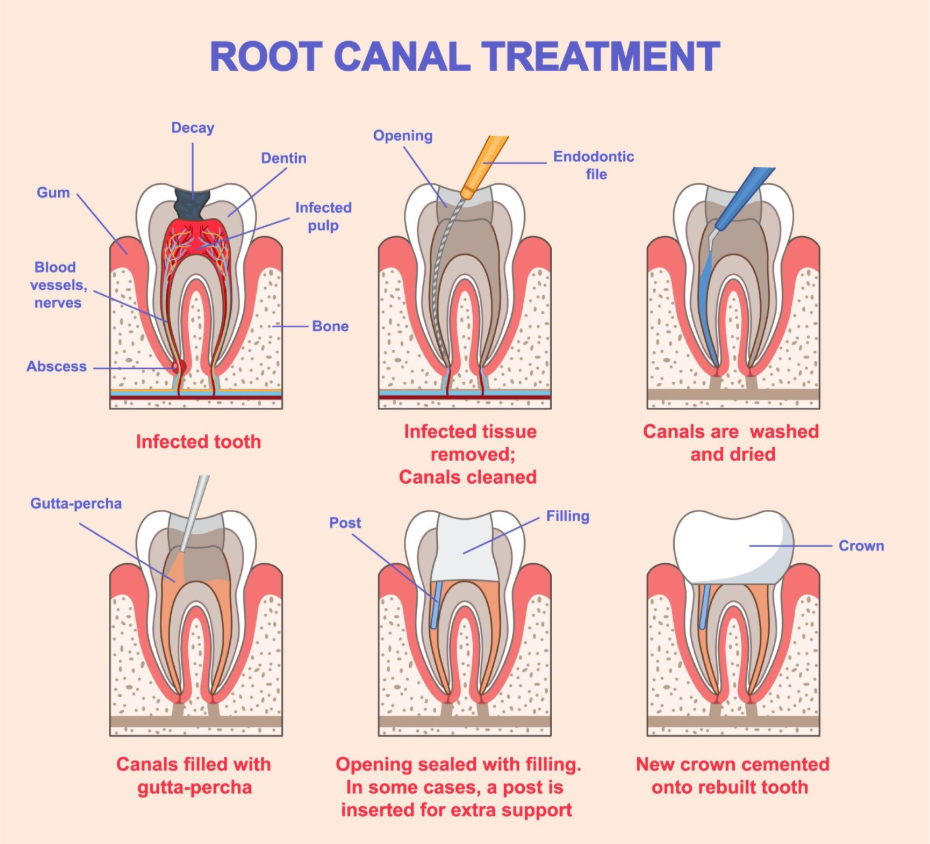
Root canal treatment is necessary when tooth decay has penetrated through the enamel and dentine to reach the soft tissue, or pulp, at the centre of the tooth. When the pulp becomes infected or inflamed due to bacteria entering through a cavity, it can cause severe pain or lead to a dental abscess. This procedure aims to save a tooth that would otherwise need to be removed by cleaning out the infected nerve and blood supply.
Getty Images
During the process, the dentist removes the infected tissue from the root canals, cleans the area thoroughly, and seals it with a biocompatible material. Most teeth that undergo root canal treatment will also require a crown or a large filling to protect the weakened structure from future fractures. This clinical intervention is a highly effective way to retain a natural tooth and maintain the alignment of the surrounding teeth.
Tooth Extraction for Severe Decay
Extraction is considered the final option when a tooth is so badly decayed that it cannot be successfully repaired with a filling, crown, or root canal. Removing a tooth prevents the spread of infection to the jawbone and surrounding tissues, which is vital for overall oral health. While dentists aim to preserve natural teeth whenever possible, an extraction may be necessary to resolve chronic pain or manage a severe abscess.
Following an extraction, the dentist will discuss options for replacing the missing tooth to prevent the adjacent teeth from shifting. The UK Government provides resources on oral health maintenance and the clinical indications for different levels of dental intervention. Common replacements for extracted teeth include dental bridges, dentures, or implants, although these are subject to clinical assessment and specific eligibility criteria.
Comparison of Common Cavity Treatments
| Treatment Type | Extent of Decay | Primary Goal | Restoration Method |
| Filling | Small to moderate | Seal the cavity | Amalgam or composite resin |
| Crown | Extensive damage | Protect and reinforce | Laboratory-made cap |
| Root Canal | Pulp infection | Save the natural tooth | Cleaning and sealing canals |
| Extraction | Irreparable loss | Prevent spread of infection | Removal of the entire tooth |
Conclusion
Managing tooth decay once a cavity has formed requires a tailored clinical approach based on the severity of the damage. Early detection through regular dental reviews often allows for simpler treatments like fillings, whereas neglected cavities may require more invasive procedures such as crowns or root canals. Maintaining the health of your natural teeth is the primary goal of modern dentistry in the UK. If you experience severe, sudden, or worsening symptoms, call 999 immediately.
How long does a dental filling usually last?
The lifespan of a filling depends on the material used and its location, but many last between five and fifteen years with proper oral hygiene.
Is the procedure for getting a filling painful?
Most fillings are performed under local anaesthetic, which numbs the area around the tooth so that the patient does not feel pain during the removal of decay.
Why does my dentist suggest a crown instead of another filling?
A crown is suggested when the remaining tooth structure is too weak to hold a filling securely without the risk of the tooth fracturing under pressure.
Can a tooth that has had a root canal get a cavity again?
Yes, while the inside of the tooth is sealed, the outer structure can still develop decay if oral hygiene is not maintained or if the restoration fails.
What happens if I leave a cavity untreated?
An untreated cavity will continue to grow, eventually reaching the nerve and causing pain, infection, or the eventual loss of the tooth.
Are white fillings available for back teeth on the NHS?
White fillings are typically offered on the NHS for front teeth, while back teeth are often restored with amalgam for increased durability, unless there is a specific clinical reason for composite.
How do I care for my tooth after a major dental restoration?
Standard care includes brushing twice daily with fluoride toothpaste, cleaning between teeth daily, and attending regular dental examinations to monitor the restoration.
Authority Snapshot (E-E-A-T)
This article is designed to provide factual education on tooth decay treatments. It was produced by the medical content team and reviewed by Dr. Stefan Petrov, a UK-trained physician with an MBBS and certifications in BLS and ACLS. Dr. Petrov has extensive experience in general medicine, surgery, and emergency care across hospital wards and intensive care units. This content is strictly aligned with the health standards and clinical evidence provided by the NHS and NICE.



