




Gallstones and gallbladder inflammation are not always confined to the gallbladder itself and can lead to significant complications in neighbouring organs. In the United Kingdom, healthcare professionals monitor gallbladder disease closely because of the shared plumbing system of the biliary tract, where ducts from the liver, gallbladder, and pancreas meet. If a stone migrates out of the gallbladder, it can obstruct these shared pathways, causing backup and secondary inflammation in the liver or the pancreas. These complications often represent a more serious clinical stage of the disease and usually require urgent hospital assessment and specialised intervention. Understanding how these organs are interconnected helps patients recognise the importance of treating symptomatic gallstones before they lead to systemic health issues. By following the established clinical pathways in the UK, patients can receive the necessary care to protect their wider digestive system from the secondary effects of gallbladder disease.
What We’ll Discuss in This Article
- The anatomical connection between the gallbladder, liver, and pancreas
- How gallstones cause blockages in the common bile duct
- The development of jaundice and liver secondary effects
- Understanding gallstone pancreatitis and its severity
- The risk of infection spreading through the biliary system
- Diagnostic tests used to check for multi organ involvement
- UK treatment pathways for complex biliary obstructions
Gallstones and cholecystitis can affect the liver and pancreas if a stone moves into the shared bile ducts and creates an obstruction
The biliary system functions as a series of connected tubes that allow digestive fluids to reach the small intestine, and a blockage at certain points can impact multiple organs simultaneously. If a gallstone blocks one of the bile ducts, it can lead to complications such as an infection of the bile ducts or inflammation of the pancreas. When a stone leaves the gallbladder and enters the common bile duct, it can prevent bile from draining out of the liver or stop digestive enzymes from leaving the pancreas. This backup of fluids causes pressure to build within these organs, leading to inflammation, chemical irritation, and a high risk of bacterial infection that can become life threatening if not treated promptly in a hospital setting.
Impact on the liver and the development of jaundice
When a gallstone obstructs the common bile duct, the bile produced by the liver cannot reach the digestive tract and instead begins to back up into the liver and enter the bloodstream. This leads to a condition known as obstructive jaundice, which is characterised by yellowing of the skin and the whites of the eyes. Gallstones can cause jaundice if they block the flow of bile out of the liver. Patients may also notice that their urine becomes very dark while their stools become pale or clay coloured due to the lack of bile reaching the gut. In the UK, this is treated as an urgent clinical matter, as prolonged blockage can lead to inflammation of the bile ducts, known as cholangitis, which often causes high fever, chills, and significant liver irritation.
Gallstone pancreatitis and the pancreas
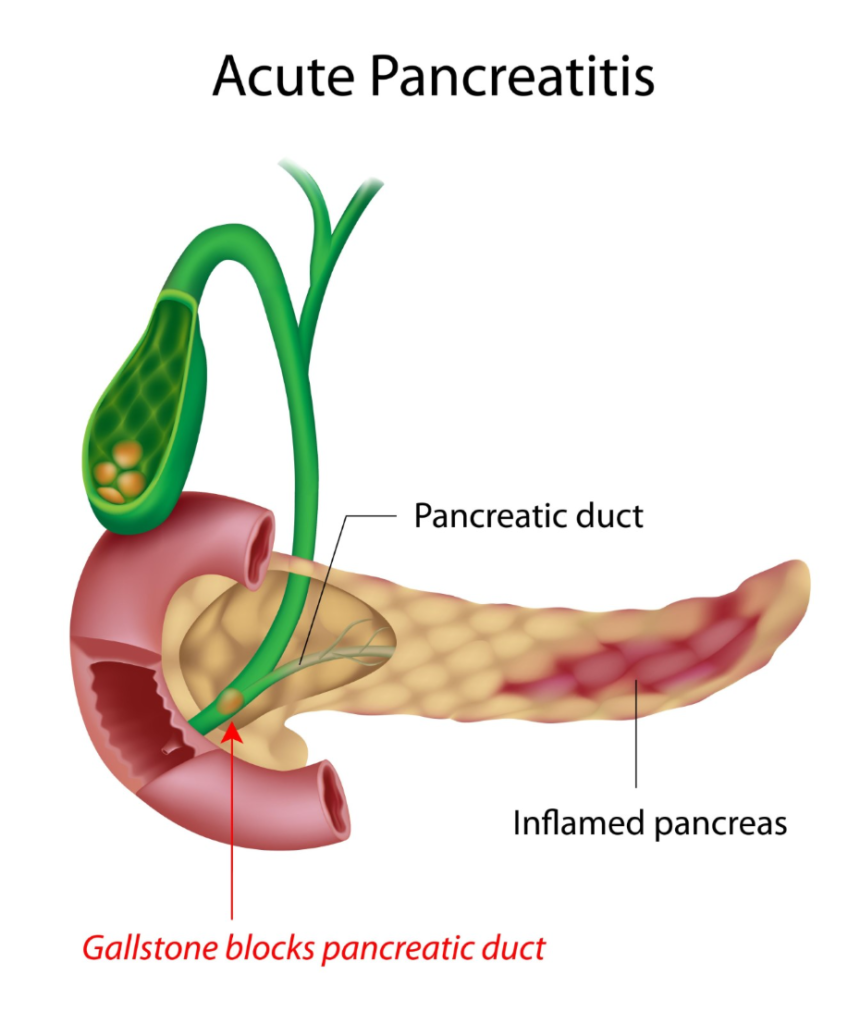
The pancreas is connected to the biliary system through a shared channel called the common bile duct, which enters the small intestine at the same point where bile is released. If a gallstone becomes stuck at this junction, it can block the pancreatic duct, preventing essential digestive enzymes from leaving the pancreas. Acute pancreatitis is a serious condition where the pancreas becomes inflamed over a short period of time, often caused by gallstones. When these enzymes are trapped, they can begin to irritate and digest the pancreatic tissue itself, causing intense, constant pain in the upper abdomen that often radiates through to the back. In the United Kingdom, gallstone pancreatitis is a leading cause of hospital admissions for pancreatic issues and requires careful monitoring to prevent organ failure or tissue death.
Clinical diagnosis and multi organ management
If a patient presents with symptoms suggesting that gallstones have affected the liver or pancreas, UK clinicians utilise a combination of blood tests and advanced imaging to locate the obstruction. Blood tests are essential for measuring liver enzymes and pancreatic amylase or lipase levels, which indicate the degree of organ irritation. According to the National Institute for Health and Care Excellence, patients with suspected bile duct stones should be offered specific imaging such as an ultrasound or an MRCP scan. Once the stone is located, a procedure called an ERCP may be used, where an endoscope is passed down the throat to physically remove the stone from the duct, thereby relieving the pressure on the liver and pancreas before the gallbladder itself is surgically removed.
Conclusion
Gallstones can lead to serious complications in the liver and pancreas by creating blockages in the shared biliary ducts. These obstructions can cause jaundice, liver infection, or acute pancreatitis, all of which require urgent medical intervention. Early diagnosis and treatment of symptomatic gallstones are vital for preventing these secondary organ issues. Following the clinical guidance provided by the NHS ensures that multi-organ complications are managed effectively to protect long term health. If you experience severe, sudden, or worsening symptoms, call 999 immediately.
Can cholecystitis alone cause pancreatitis?
Cholecystitis is inflammation of the gallbladder, but if a stone from that inflamed gallbladder moves into the bile duct, it can then trigger pancreatitis.
Is jaundice always caused by gallstones?
No, jaundice can have many causes, but a gallstone blocking the bile duct is a very common reason for obstructive jaundice in adults.
How do I know if my pancreas is affected?
Pancreatic inflammation usually causes severe, persistent pain in the top of the tummy that feels like it is going through to your back.
Can the liver heal after a gallstone blockage is removed?
Yes, in most cases, once the obstruction is cleared and the bile starts flowing again, the liver enzymes return to normal, and the liver recovers.
What is cholangitis?
Cholangitis is a serious infection of the bile ducts that occurs when a blockage allows bacteria to build up, often causing fever and jaundice.
Is gallstone pancreatitis life threatening?
While many cases are mild, it can be very serious and requires hospitalisation to prevent complications like infection or organ damage.
Will I still have liver problems after my gallbladder is removed?
Once the gallbladder and any duct stones are removed, the primary source of these blockages is gone, and the liver usually functions normally.
Authority Snapshot (E-E-A-T Block)
This article was developed by the Medical Content Team to provide educational information on the complications of gallbladder disease. The content has been reviewed by Dr. Stefan Petrov, a UK-trained physician with experience in general medicine, surgery, and emergency care, to ensure complete alignment with NHS and NICE clinical guidance. Our purpose is to help the public understand the importance of managing biliary health through factual and restrained reporting.



