




Repeated episodes of diverticulitis increase the risk of structural bowel complications such as scarring and narrowing, but they do not share the same biological progression toward malignancy that is associated with certain types of colon polyps. Diverticulitis is an inflammatory condition where small pouches in the colon wall become infected, leading to acute tissue damage and eventual repair cycles that can alter the anatomy of the large intestine. Colon polyps, in contrast, are cellular overgrowths on the inner lining that are monitored primarily because of their potential to undergo genetic mutations over time. While both conditions can result in serious health outcomes if left unmanaged, the complications arising from recurrent diverticulitis are mechanical and inflammatory, whereas the risks associated with polyps are primarily cellular and oncological. In the United Kingdom, healthcare professionals manage these two issues using distinct clinical pathways, focusing on infection control for diverticulitis and preventative removal for polyps. Understanding the difference between these risk profiles is essential for long-term gastrointestinal health. By distinguishing between structural “wear and tear” and abnormal cell growth, the UK healthcare system provides targeted care that addresses the specific dangers posed by each condition.
What We’ll Discuss in This Article
- The mechanical impact of recurrent inflammation on the colon wall.
- How repeated diverticulitis leads to strictures and bowel obstructions.
- Differentiating between inflammatory complications and cellular mutations.
- The risk of fistula formation following chronic diverticular infections.
- Why recurrent episodes necessitate a review of preventative bowel care.
- UK clinical protocols for managing long-term structural bowel damage.
Mechanical Complications of Recurrent Diverticulitis
Repeated episodes of diverticulitis lead to mechanical complications by causing the colon wall to thicken and lose its flexibility through a process of chronic scarring known as fibrosis. Each time a diverticular pouch becomes inflamed or infected, the body initiates a healing response that involves the production of tough connective tissue. The NHS states that diverticulitis can cause complications such as a blockage in the bowel caused by scarring from previous episodes.
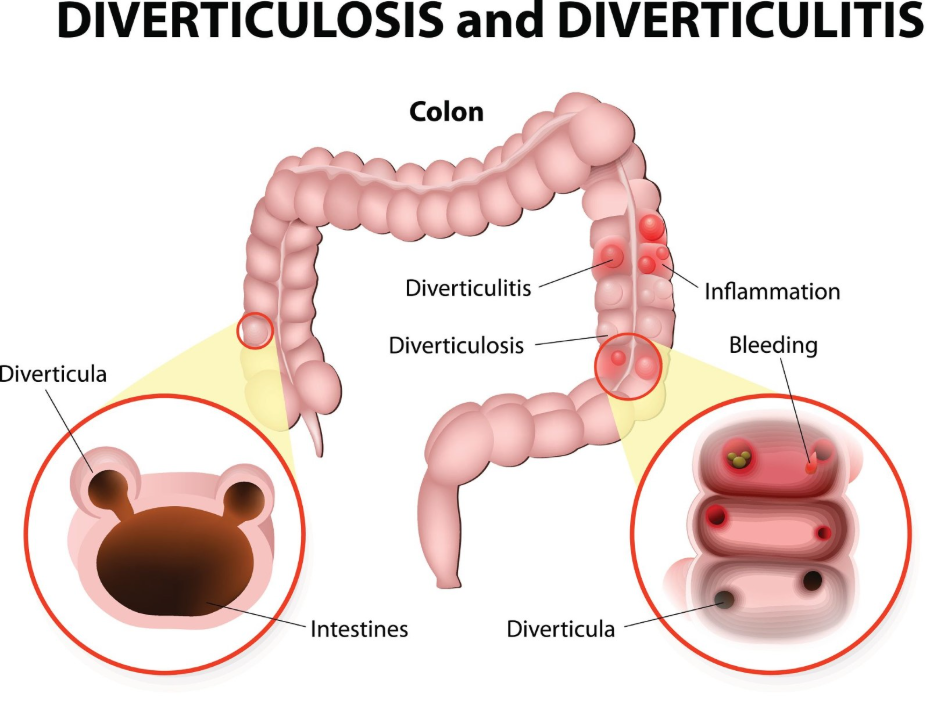
As these episodes occur more frequently, the layers of scar tissue build up, which can narrow the internal channel of the bowel. This narrowing, called a stricture, makes it increasingly difficult for waste to pass through, potentially leading to a partial or complete bowel obstruction. This mechanical failure is fundamentally different from the complications of polyps, which involve the growth of a mass rather than the tightening of the entire wall. In the United Kingdom, clinicians monitor patients with recurrent diverticulitis for signs of narrowing to prevent acute surgical emergencies.
Cellular Risks: Polyps versus Inflammatory Damage
The risk profile for colon polyps is primarily defined by the potential for cellular malignancy, a risk that is not biologically increased by the presence of repeated diverticulitis episodes. Polyps, specifically adenomas, are monitored because they can undergo a series of genetic mutations that transform healthy tissue into cancerous cells over several years.
NICE clinical guidelines for colorectal cancer prevention emphasise that identify and removing polyps is the cornerstone of preventing bowel cancer, as these growths represent a different pathological pathway than inflammatory diverticular disease. While chronic inflammation in conditions like ulcerative colitis can increase cancer risk, diverticulitis is generally confined to the pouches and the immediate surrounding wall. Therefore, having multiple episodes of diverticulitis does not mean a person is more likely to develop polyps or the specific type of cancer they cause. In the UK, these two conditions are treated as independent risks: one requiring surgical removal of growths and the other requiring lifestyle and medical management of infection.
Fistula Formation and Chronic Tissue Erosion
A unique complication of repeated diverticulitis is the development of a fistula, which occurs when chronic inflammation causes the colon to abnormally connect to another nearby organ. This happens because recurrent infections can cause the wall of a diverticular pouch to erode through the outer layers of the colon and into adjacent structures such as the bladder, vagina, or small intestine.
A fistula is a structural failure of the tissue boundaries, a complication that polyps do not typically cause unless they are very advanced. NICE clinical guidelines for diverticular disease management identify fistulas as a significant complication of recurrent inflammation that often requires surgical intervention to repair the abnormal connections. Symptoms of a fistula can include recurrent urinary tract infections or the passage of gas from the bladder. In the United Kingdom, patients with a history of multiple diverticulitis flare-ups are assessed for these “tunnelling” infections, which represent a significant escalation of structural bowel disease.
Comparison of Long-term Risk Factors
The long-term dangers of polyps and recurrent diverticulitis are compared below to illustrate how they affect the body differently despite both occurring in the large intestine.
| Feature | Recurrent Diverticulitis | Colon Polyps |
| Type of Change | Structural scarring and wall thickening. | Localised cellular overgrowth. |
| Obstruction Risk | High; due to strictures (narrowing). | Moderate; due to large mass growth. |
| Malignancy Risk | Low; primarily an inflammatory issue. | High; potential for cellular mutation. |
| Infection Risk | High; potential for abscesses. | Low; polyps are rarely infected. |
| UK Management | Fibre, hydration, or elective surgery. | Polypectomy (removal) and surveillance. |
This comparison highlights that the “danger” of diverticulitis is its ability to damage the plumbing and structure of the gut, whereas the “danger” of polyps is their ability to change the nature of the cells themselves. In the UK, managing a patient with both issues involves two parallel strategies: one to keep the bowel open and infection-free, and another to keep the lining clear of abnormal growths.
The Role of Scarring and Strictures in Bowel Health
The accumulation of scar tissue from repeated diverticulitis flare-ups is the most common cause of long-term functional impairment, leading to persistent symptoms like chronic constipation or thin, ribbon-like stools. Each inflammatory event triggers the release of collagen to patch the damaged wall; however, the colon is not designed to function with a significant amount of fibrous tissue.
Strictures can become so narrow that they mimic the symptoms of a large polyp or even a tumor, which is why UK doctors often recommend a colonoscopy or CT scan once the inflammation has settled. This ensures that the narrowing is indeed scar tissue and not a separate growth. The GOV.UK health pages indicate that identifying the cause of a bowel obstruction is vital for determining whether a patient needs elective surgery to remove a scarred segment of the colon. Unlike polyps, which can be snipped off during a procedure, a stricture often requires the surgical removal of the affected section of the bowel if it significantly impacts the quality of life or waste passage.
UK Clinical Protocols for Managing Recurrence
The UK healthcare system uses a staged management approach for recurrent diverticulitis that prioritises lifestyle modifications and conservative care before considering surgical options. If a patient experiences multiple episodes, a GP or specialist will typically focus on a high-fibre diet and adequate hydration to reduce the internal pressure that causes pouches to flare up.
The clinical pathway for recurrent diverticulitis includes:
- Dietary Review: Gradually increasing fibre intake once the acute infection has passed.
- Imaging: Using CT scans to check for abscesses or evidence of chronic scarring.
- Follow-up Colonoscopy: Performing a visual check six to eight weeks after a flare-up to rule out polyps and assess the level of scarring.
- Surgical Consultation: Discussing elective resection (removing part of the colon) if the episodes are frequent or if a stricture has formed.
By managing the recurrence effectively, UK clinicians aim to prevent the structural failures like perforation or obstruction that constitute a medical emergency. This proactive approach ensures that the “wear and tear” of the colon wall is monitored, even though it does not carry the same malignant risk as the cellular overgrowths found in polyps.
Conclusion
Repeated diverticulitis episodes increase the risk of mechanical complications like strictures and fistulas, but they do not share the cellular cancer risk associated with polyps. While polyps require removal to stop genetic mutations, diverticulitis requires management to prevent anatomical damage and scarring. In the UK, both conditions are managed through structured screening and symptom-led care to maintain the overall health of the large intestine. Adhering to dietary advice and attending follow-up checks are the most effective ways to reduce the risk of structural failure. If you experience severe, sudden, or worsening symptoms, call 999 immediately.
If I have diverticulitis many times, am I more likely to get bowel cancer?
No; diverticulitis is an inflammatory condition and does not increase your risk of the cellular changes that lead to bowel cancer from polyps.
Can a stricture from diverticulitis be removed like a polyp?
No; a stricture involves the whole thickness of the bowel wall, so it usually requires a surgical operation to remove that segment of the colon.
Why does my doctor want to check for polyps after my diverticulitis is better?
Inflammation can hide polyps on a scan, so doctors perform a check once the swelling is gone to ensure nothing else is present.
Can a high-fibre diet fix the scarring from old episodes?
Fibre cannot remove existing scar tissue, but it can help prevent new episodes of inflammation that would cause further scarring.
What is the difference between a polyp and an abscess?
A polyp is a growth of tissue on the inner lining, whereas an abscess is a collection of pus caused by an infection in a pouch.
Will surgery for diverticulitis remove my risk of polyps?
Surgery only removes the affected part of the colon; polyps can still grow in the remaining sections of your large intestine.
How many episodes are considered “repeated” diverticulitis?
In the UK, two or more episodes are generally considered recurrent, triggering a discussion about long-term management strategies.
Authority Snapshot (E-E-A-T)
This article provides medically factual health education regarding the risks of recurrent diverticulitis, strictly aligned with NHS and NICE clinical guidelines. The content is developed by a professional medical writing team and reviewed by Dr. Stefan Petrov, a UK-trained physician with extensive experience in emergency care, surgery, and general medicine. All information follows current UK public health protocols to ensure clinical accuracy and patient safety.



