




The progression of fatty liver disease to cirrhosis is typically a slow process that occurs over several decades, although the exact timeline varies significantly between individuals based on their metabolic health and lifestyle choices. For many people, the accumulation of fat in the liver remains stable and does not lead to serious harm if managed early. However, in a subset of patients, the fat triggers chronic inflammation that gradually replaces healthy liver cells with scar tissue. This transition from a healthy liver to one affected by cirrhosis usually involves moving through several distinct stages of damage. In the United Kingdom, medical professionals focus on identifying this progression in its early phases, as interventions are most effective before the scarring becomes extensive and permanent. Understanding the factors that influence this timeline is essential for maintaining long term liver health and preventing the onset of advanced liver failure.
What We’ll Discuss in This Article
- The typical multi-decade timeline for liver disease progression.
- The four clinical stages from simple fat buildup to cirrhosis.
- Biological factors that can accelerate the rate of liver scarring.
- The role of persistent inflammation in shortening the progression window.
- How metabolic conditions like type 2 diabetes influence the timeline.
- UK clinical methods for monitoring the speed of liver changes.
The Typical Timeline of Disease Progression
The progression from the initial accumulation of fat to the development of cirrhosis generally takes between 20 and 30 years for most individuals. This slow rate of change is why fatty liver disease is often considered a “silent” condition, as the liver can compensate for gradual damage for a long period without producing symptoms. The NHS states that while most people with non-alcoholic fatty liver disease will only ever develop the first stage, a small number can develop more serious liver damage if it is not caught and managed.
During the first decade, the liver may simply store excess fat, a stage known as simple steatosis. It is often during the second and third decades of persistent metabolic stress that inflammation begins to cause structural changes. Because the liver is a highly resilient organ, it takes a vast amount of cumulative injury to transform soft, functional tissue into the hard, nodular scar tissue characteristic of cirrhosis. This extended timeline provides a significant window of opportunity for clinical intervention and lifestyle modification.
The Four Stages of Liver Damage
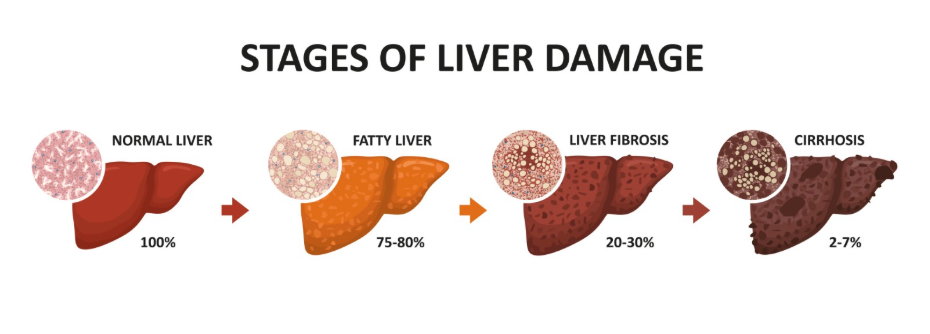
To understand the timeline, it is necessary to view the disease as a progression through four distinct stages that represent increasing levels of cellular injury. Not every person with a fatty liver will move through every stage, and many will remain in the earliest phase for their entire lives. NICE clinical guidelines emphasise that identifying where a patient sits on this spectrum is vital for predicting their long term risk of cirrhosis and liver failure.
The stages are as follows:
- Simple Steatosis: A largely harmless buildup of fat in liver cells that may stay stable for decades.
- Non-Alcoholic Steatohepatitis (NASH): A more aggressive stage where the fat causes inflammation and cell damage, typically occurring after years of fat accumulation.
- Fibrosis: Persistent inflammation leads to the development of scar tissue around the liver cells and blood vessels.
- Cirrhosis: The most advanced stage, where the liver is significantly scarred and its structure is permanently altered.
Factors That Accelerate Scarring
While the 20 to 30 year window is common, certain biological and lifestyle factors can cause the liver to scar much faster, sometimes reaching cirrhosis in as little as 10 years. One of the most significant accelerators is the presence of other metabolic issues, such as poorly controlled type 2 diabetes or high blood pressure. These conditions create a state of “metabolic stress” that fuels liver inflammation.
Additionally, lifestyle habits such as heavy alcohol consumption or a diet extremely high in refined sugars can place an added toxic burden on the liver. The combination of fat and another source of injury, such as a viral hepatitis infection, can also cause the liver to move through the stages of fibrosis much more rapidly. In the UK, clinicians look for these “multi-hit” scenarios to identify patients who may need more frequent monitoring to prevent rapid progression.
The Role of Persistent Inflammation
The speed at which fatty liver disease progresses is largely determined by the intensity and persistence of the inflammatory response. Once the liver enters the NASH stage, the inflammatory cells release chemicals that activate specialised cells to produce collagen. If this inflammation is constant, the collagen builds up into thick bands of scar tissue much more quickly than if the inflammation is intermittent.
| Stage of Damage | Typical Duration | Reversibility |
| Simple Steatosis | Years to Decades | Highly Reversible |
| NASH | 5 to 10 Years | Often Reversible |
| Fibrosis | 5 to 10 Years | Potentially Reversible (Early) |
| Cirrhosis | Permanent Stage | Generally Irreversible |
Individual immune responses also vary; some people’s bodies may respond to liver injury with a more aggressive scarring process than others. This biological variation explains why two people with similar weight and diet might have very different rates of liver disease progression. Regular blood tests to monitor liver enzymes can help UK doctors see if active inflammation is occurring, providing a clue to the potential speed of scarring.
Monitoring the Speed of Change in the UK
In the United Kingdom, the NHS uses non-invasive technology to monitor how quickly a person’s liver is changing over time. Rather than relying solely on the passage of years, specialists use a FibroScan to measure liver stiffness. Stiffer tissue indicates more scar tissue, and by comparing scans taken a few years apart, doctors can determine the actual rate of progression for that specific patient.
The GOV.UK health pages indicate that proactive monitoring of metabolic risk factors is the most effective way to identify individuals whose liver disease may be progressing faster than average. This data allows the clinical team to adjust management plans, perhaps suggesting more intensive dietary changes or medical support to control blood sugar. By tracking the individual’s unique timeline, healthcare providers can work to ensure that the “silent” progression of fatty liver disease never reaches the stage of cirrhosis.
Conclusion
The progression of fatty liver disease to cirrhosis usually takes several decades of persistent metabolic stress and inflammation. While the timeline is typically slow, it can be accelerated by conditions like type 2 diabetes, additional liver stressors, or a high intensity inflammatory response. Regular clinical monitoring and addressing metabolic health early are the most effective ways to slow or halt this progression. If you experience severe, sudden, or worsening symptoms, call 999 immediately.
Can fatty liver turn into cirrhosis in just a few years?
It is very rare for this to happen in just a few years; it almost always takes a decade or more of constant inflammation and damage.
If I have a fatty liver, is cirrhosis inevitable?
No, the vast majority of people with fatty liver disease do not develop cirrhosis, especially if they make healthy lifestyle changes.
Does losing weight stop the clock on progression?
Yes, losing weight can reduce liver fat and inflammation, which can halt the progression of scarring and sometimes even allow early stage damage to heal.
Why does diabetes speed up liver scarring?
High blood sugar and insulin resistance create more oxidative stress in the liver, which triggers the inflammatory pathways that lead to scars.
How often should I have my liver checked to monitor progression?
Most UK guidelines suggest a re-evaluation of liver stiffness every three years for those at low risk, though high risk patients may be checked more often.
Is the damage from NASH permanent?
NASH is often reversible if the underlying cause is addressed, but if it progresses to advanced fibrosis or cirrhosis, the changes become more permanent.
Can a healthy diet slow down the progression even if I don’t lose weight?
A healthy diet that is low in sugar and processed foods can reduce the metabolic stress on the liver, which may help slow down inflammation.
Authority Snapshot (E-E-A-T)
This article provides medically factual health education regarding the timeline of liver disease, strictly aligned with NHS and NICE clinical protocols. The content is developed by a professional medical writing team and reviewed by Dr. Rebecca Fernandez, a UK-trained physician with experience in internal medicine, surgery, and emergency care. All information follows current UK public health standards to ensure accuracy and patient safety.



