
Imaging plays a central role in the diagnostic pathway for pancreatitis, though it is not always required for the initial diagnosis if other clinical criteria are met. Healthcare professionals in the United Kingdom use various scanning techniques to visualise the pancreas and surrounding organs to confirm inflammation, identify the underlying cause, and assess the severity of the condition. The necessity and timing of these scans depend on the clinical presentation of the patient and the clarity of initial laboratory results.
What We’ll Discuss in This Article
- The diagnostic criteria that determine when imaging is required.
- The role of ultrasound in identifying gallstone-related pancreatitis.
- When and why a CT scan is used to assess pancreatic damage.
- The use of MRI and MRCP for detailed ductal investigations.
- How imaging helps in distinguishing between acute and chronic types.
- The safety and limitations of different imaging modalities.
Clinical Criteria and the Necessity of Imaging
Imaging is considered necessary for diagnosis when a patient does not meet the standard biochemical or clinical thresholds for a definitive diagnosis of pancreatitis. Under the clinical guidelines used in the UK, a diagnosis of acute pancreatitis is often made if a patient has characteristic abdominal pain and blood tests showing significantly elevated pancreatic enzymes. If these two factors are present, a scan may not be strictly required to confirm the diagnosis itself, though it is frequently performed later to look for a cause.
However, if the blood results are inconclusive or if the symptoms are atypical, imaging becomes essential to rule out other serious abdominal conditions. Furthermore, imaging is nearly always necessary to investigate the cause of the inflammation, such as gallstones, or to monitor for complications like fluid collections or tissue death. Consequently, while some patients may be diagnosed without an immediate scan, most will undergo imaging at some stage during their hospital stay.
The Role of Ultrasound Scans
Ultrasound is typically the first imaging test performed when pancreatitis is suspected because it is non-invasive and highly effective at detecting gallstones. An ultrasound scan is recommended for all patients with acute pancreatitis to check for gallstones in the gallbladder or bile ducts. This is a priority because identifying gallstones as the cause can significantly change the immediate management plan, such as the need for surgical intervention or duct clearance.
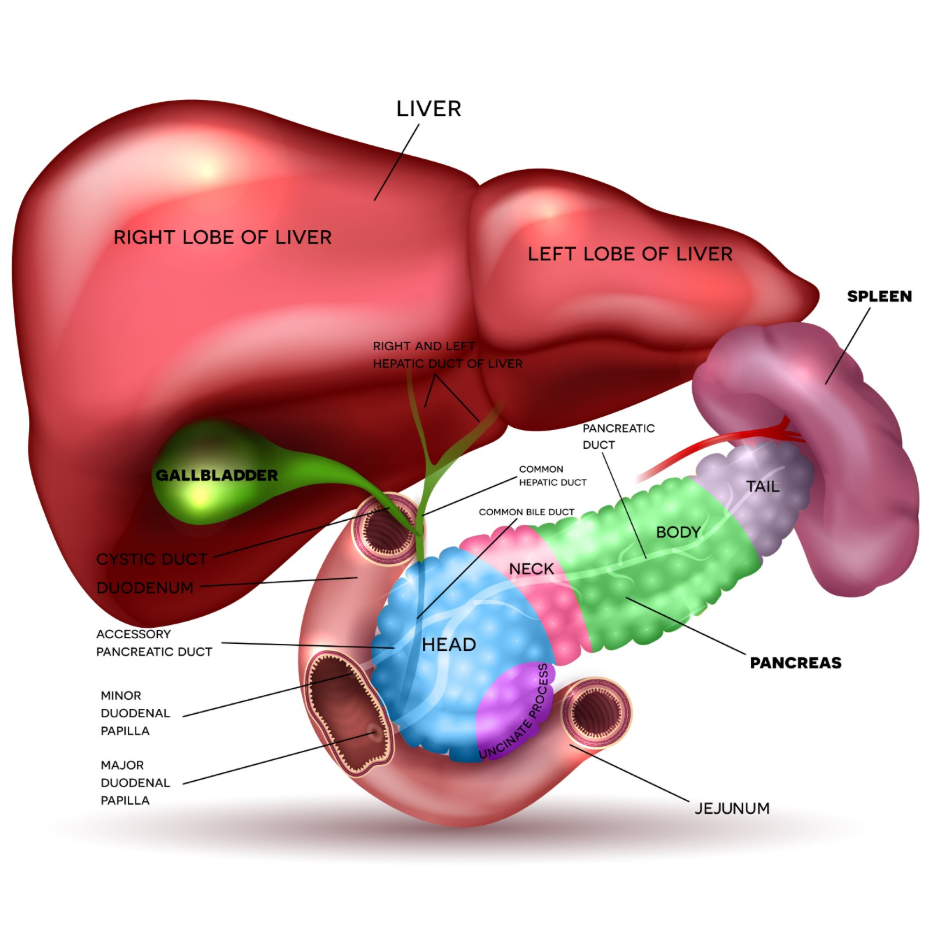
While ultrasound is excellent for looking at the gallbladder, it is less effective at providing a detailed view of the pancreas itself. This is often due to “overlying bowel gas,” which can block the sound waves used by the ultrasound machine during an episode of abdominal inflammation. Therefore, while a normal ultrasound can suggest the absence of gallstones, it does not necessarily mean the pancreas is healthy, often necessitating further cross-sectional imaging.
Computerised Tomography (CT) Scans
A CT scan is the gold standard for assessing the severity of pancreatitis and is necessary if there is a suspicion of complications. Unlike ultrasound, a CT scan provides a highly detailed, three-dimensional view of the entire pancreas, allowing doctors to see if the organ is swollen or if there are areas of necrosis, where the tissue has lost its blood supply. CT scans are usually performed with an intravenous contrast dye to make the blood vessels and inflamed tissues more visible.
Timing is a critical factor for CT imaging in acute cases. Performing a CT scan too early, such as within the first 24 hours of symptoms, may not accurately show the extent of the damage because it takes time for certain complications to become visible. Most UK clinical pathways suggest that if a CT scan is needed to assess severity, it is best performed between 72 and 96 hours after the onset of symptoms for the most accurate results.
Magnetic Resonance Imaging (MRI) and MRCP
MRI is used as an alternative to CT scans in specific circumstances, such as when a patient cannot tolerate contrast dye or when more detail of the ductal system is required. Magnetic Resonance Cholangiopancreatography (MRCP) is a specialised type of MRI that focuses specifically on the bile ducts and the pancreatic duct. This is a non-invasive way to look for small stones or structural abnormalities that may have been missed by ultrasound or CT scans.
MRCP is particularly useful for patients who have persistent jaundice or where the cause of the pancreatitis remains unknown after initial tests. Because it does not use ionising radiation, it is also a preferred option for younger patients or those who require repeated imaging over a long period. However, MRI scans take longer to perform than CT scans and may not be suitable for patients with certain metallic implants or severe claustrophobia.
Imaging for Chronic Pancreatitis
In cases of chronic pancreatitis, imaging is absolutely necessary because blood tests are often normal and the diagnosis relies on seeing permanent structural damage. Doctors look for specific markers of long-term inflammation, such as the presence of calcium deposits (calcification) within the pancreatic tissue or a permanently widened pancreatic duct. These changes are evidence that the pancreas has been scarred over time.
NICE guidelines state that imaging should be used to identify complications of chronic pancreatitis and to help plan long-term management. Endoscopic ultrasound (EUS) is another advanced imaging tool sometimes used for chronic cases. It involves passing a thin tube with an ultrasound probe at the tip down into the stomach, which allows for extremely high-resolution images of the pancreas from just a few millimetres away.
Comparison of Imaging Modalities
The table below provides a comparison of the different imaging techniques used in the investigation of pancreatitis.
| Imaging Type | Primary Strength | Main Limitation |
| Ultrasound | Detecting gallstones; no radiation | Bowel gas can obscure the pancreas |
| CT Scan | Assessing severity and complications | Uses radiation and intravenous contrast |
| MRI/MRCP | Detailed view of the ducts | Takes longer to perform; not always available |
| Endoscopic Ultrasound | Extremely high detail | Invasive procedure requiring sedation |
Conclusion
Imaging is an essential component of the diagnostic process for pancreatitis, although its timing and necessity vary between patients. While initial diagnosis may rely on symptoms and blood tests, ultrasound and CT scans are vital for identifying causes and assessing the health of the pancreatic tissue. These tools ensure that healthcare professionals can provide the most appropriate treatment and monitor for potential complications. If you experience severe, sudden, or worsening symptoms, call 999 immediately.
Is the radiation from a CT scan dangerous?
A CT scan does involve a dose of radiation, but doctors only order these scans when the clinical benefit of an accurate diagnosis outweighs the small risk. For many patients with severe abdominal pain, the scan is necessary to identify life-threatening complications.
Why did I have an ultrasound if I am already having a CT scan?
The two scans look for different things; ultrasound is the best way to see if gallstones are present in the gallbladder, whereas a CT scan is better at looking for damage to the pancreas itself.
Can a scan tell the difference between a tumour and pancreatitis?
In many cases, the appearance of the pancreas on a CT or MRI scan can help distinguish between inflammation and other growths. However, if the results are unclear, further tests like an endoscopic ultrasound or a biopsy might be necessary.
How long does a CT scan take?
The actual scanning process usually takes less than five minutes, although the entire appointment may take longer if you need to drink a special liquid or have a cannula inserted for contrast dye.
Why was my first scan normal if I have pancreatitis?
In the very early stages of acute pancreatitis, the pancreas may appear normal on a scan. It can take several days for swelling or other visible changes to develop, which is why a second scan is sometimes performed later.
Will I need a scan every time I have a flare-up?
Not necessarily. If you have a known diagnosis of chronic pancreatitis and the flare-up is mild, your doctor may manage it based on symptoms and blood tests without repeating a scan.
Authority Snapshot (E-E-A-T)
This article provides educational information on the imaging protocols for pancreatitis within the UK healthcare system. The content is developed in accordance with NHS clinical standards and NICE guidelines to ensure evidence-based accuracy. All information has been prepared and reviewed by the Medical Content Team and Dr. Stefan Petrov to assist the general public in understanding medical diagnostic pathways.
